OM1 for Birds in Flight – as good as the A9?

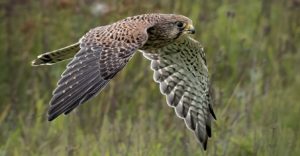
Is the Olympus OM1 a big improvement on the EM1x, and can it compete with cameras like the Sony A9? I got my spiffy new OM Digital Solutions OM1 camera in early March 2022, and have been wanting to try it out on some intensive bird in flight action. Once the half-term and having fun with Grandkids period was over, I headed down to the Hawk Conservancy Trust in Andover to run it through its paces. The weather was great, and I took over 6000 test shots. Swift answer, it’s a huge improvement on the EM1x, and at the HCT at least, it outperformed the A9, by a comfortable margin. Here are some of the best shots I took over the two days.
If you would rather head straight to a concise summary, the TL;DR is at the foot of the page — or jump directly to the FAQ.
Hawk Conservancy Trust for birds in flight

The HCT provides a pretty good location for testing autofocus hit rate. There are two displays daily, using more or less the same birds flying in the same sequence in the same way. This is about as close as you can get to a demanding but repeatable test setup for birds in-flight.
There is a morning session in which birds fly fast towards or across the camera, quite close in, using focal lengths between 150 mm and 450 mm. The starting position of the birds is almost always known.
The afternoon session has extremely fast and unpredictable bird movements where either the speeds are extreme as with Peregrine Falcons, or the movement is incredibly sudden as with Kites chasing vertically upwards after catapulted bits of chicken. and you have maybe 1 second to focus, compose, and shoot. The afternoon focal lengths are usually around 500 to 800 mm.
As a rough generalisation, the morning session tests the ability to lock focus over a sequence of shots, and the afternoon tests the ability to instantly acquire focus and capture very sudden movement. The latter is a very tough test but quite representative of places like RSPB Bempton cliffs for example, where you have literally only seconds to grab shots of extremely fast moving Puffins or Gannets.
I tested over two full days at the HCT, thinking that I would use the first day to get used to the system. In fact the results were very similar over both days, showing that the camera is fast to get comfortable with.
OM1 setup
Based on my experience with the EM1x at Bempton Cliffs, where I got excellent focus accuracy, I used the following settings for the OM1.
Custom setting 1, using bird tracking and Pro Capture to pick up interesting shots and take-off (which I prefer to long boring sequences)
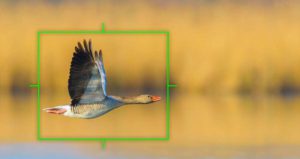
- CAF with AI Bird Tracking (AIBT) on
- Small centre focus point to initially engage AIBT
- Pro Capture
- Continuous shutter SH2 at 25 fps frame rate to get blackout free viewfinder at a manageable frame rate
- 300mm F4, and 40-150 Pro plus 1.4 TC (= 56-210 at F4)
- Manual shutter 1/2000 and aperture at F4, auto ISO with exp comp on back dial
Custom setting 2, for instant fast moving birds – mostly the afternoon session.
- CAF with AI Bird Tracking (AIBT) on
- 5×5 box to initially engage AIBT
- Pro capture off
- Everything else as above.
Results
I checked the focus accuracy of every image using FastRawViewer at 1:1 in the original raw format, with additional sharpness applied and using focus peaking tools, and exposure adjustments where necessary.
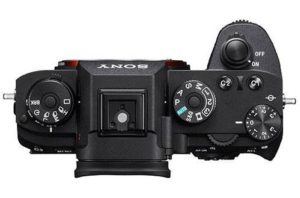
In the table below, you can see the comparison of the OM1 this year against the EM1x and the A9 in the same circumstances at HCT in 2021. For the morning session, the OM1 outperformed the EM1x handily but also was significantly better than the A9 – at a 75% hit rate, vs 61% and 63% respectively. The OM1 performance in the challenging afternoon session was even better at 81% in focus, versus 45% for the EM1x and 39% for the A9. That’s a hit rate of more than double the A9 hit rate.
You can’t be serious
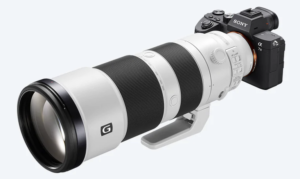
My original post created a great deal of incredulity that the A9 only got 39% in the afternoon session. But as I have explained many times, this is because the A9 plus the 200-600 lens is much slower to react than the OM1 (or EM1x) and the 300mm f4. In the afternoon sessions, for Falcons and vertical food catapulting for Kites you have to immediately focus and shoot a bird whose position is changing wildly and quickly and you have literally a second to find the bird and get the picture.
In this situation, which is not uncommon when a single bird is being shot in the wild, the A9 was slower to gain focus and on many occasions did not get the shot. The OM1 is superb here – it would be in focus within 2 or 3 frames, and usually got the shot, while the A9 would often shoot a whole sequence that were all out of focus, but where the focus points were on target. This video shows you the A9 problem.
What about the A1? Who cares about the A9?
I don’t have an A1 or the 200-600 lens as I sold mine after I found how slow it was, and how good the EM1x was against all the then current Sony cameras. I think the A1 with it’s excellent bird tracking will be better than the A9, and seems better than the OM1 for steady birds in flight (see Mike Lane’s excellent video on this). But I would bet that it does not compare as well for superfast action shots like the HCT afternoon session, because the 200-600 is still a slow reacting lens, and I have heard the A1 is also slower to react than the OM1.
The A9 is still a fair comparison I think, as it’s a flagship Sony camera, and has comparable megapixels to the OM1. In this comparison the OM1 wins by a mile. I am ready to move in a heartbeat if I find a better system, but I am guided by data, not opinion, and my data tells me to stay with OM systems.
Oh, the owls
You will notice a data line for an owl display below. I have not included it in the mainline comparison because I have only tested the owl session with the EM1x. English owls don’t like sunlight, so the display is held in a wooded area, and is incredibly hard to get a good focus rate in. This is because the light levels are low, the flight runs are very short, and they fly in between trees at pretty high speeds. The best hit rate I ever got with the EM1x was 48%. With the OM1, using the same settings, I got 66%, which believe me is pretty amazing.
Test data
| Morning | Afternoon | Overall | |||||||
| Total | In focus | %in focus | Total | In focus | %in focus | Total | In focus | %in focus | |
| E-M1x with 40-150 1.4tc and 300 | 369 | 224 | 61% | 438 | 199.00 | 45% | 807 | 423 | 52% |
| AR9 +200-600 | 440 | 275 | 63% | 1003 | 391 | 39% | 1,443 | 666 | 46% |
| OM1 with 40-150 1.4tc & 300 day 1 | 1952 | 1438 | 74% | 845 | 731 | 87% | 2,797 | 2,169 | 78% |
| OM1 with 40-150 1.4tc & 300 day 2 | 1054 | 804 | 76% | 1485 | 1145 | 77% | 2,539 | 1,949 | 77% |
| TOTALS | 3006 | 2242 | 75% | 2330 | 1876 | 81% | 5,336 | 4,118 | 77% |
| OM1 Day 1 Owls | 638 | 420 | 66% | ||||||
TL;DR
- Across over 5,300 in-frame shots tested at the Hawk Conservancy Trust in 2022, the OM-1 achieved a 75% focus hit rate in the morning session and 81% in the demanding afternoon session — versus 63%/39% for the Sony A9 and 61%/45% for the EM1x.
- The afternoon advantage is the key result. In sessions requiring instant focus acquisition on suddenly moving birds (Falcons, Kites), the OM-1 hit rate was more than double the A9’s — reflecting the weight and reaction-speed advantage of the lighter 300mm f4 and 40-150mm TC combination versus the 200-600mm zoom.
- The OM-1 achieved 66% hit rate on owls in low-light woodland conditions — a significant improvement over the EM1x’s 48% in the same location with the same settings.
- The A9’s lower afternoon score is not a criticism of its AF algorithm but a consequence of its heavier lens being slower to swing and acquire focus on a rapidly repositioning bird — a real-world handling factor that lab tests rarely capture.
- These tests pre-date the Sony A7V and OM-1 Mk II. For the most current comparison, see the 2025–26 focus accuracy shootout posts in the OM vs Sony series.
Frequently asked questions
Why did the A9 score so poorly in the afternoon session?
It is not a criticism of the A9’s autofocus algorithms, which are genuinely excellent. The problem is the 200-600mm lens — it is heavy, slow to swing, and slow to acquire initial focus on a bird that has just appeared or changed direction in an instant. The OM-1 with the 300mm f4 or 40-150mm with TC is far lighter and snaps to focus within two or three frames. In the afternoon session, where you have literally one second to find and shoot a rapidly repositioning bird, that reaction time gap is decisive.
How was focus accuracy assessed?
Every image was checked at 1:1 in FastRawViewer on the original RAW file, with additional sharpness and focus peaking applied, and exposure adjustments where necessary to make soft details visible. This is a more reliable method than reviewing JPEGs or compressed previews, which can mask marginal focus errors.
Is the Sony A1 a fairer comparison than the A9?
Probably, but the A1 was not available for these tests. Based on published information and Mike Lane’s video comparison (linked in the post), the A1 appears better than the OM-1 for steady sustained BIF in ideal conditions, but is likely still at a disadvantage in the sudden-movement scenarios of the HCT afternoon session, because the lens weight and reaction speed issues remain. The more recent OM vs Sony shootout posts test the OM-1 Mk II against the A7V with the latest Sony zooms.
Why use the Hawk Conservancy Trust rather than shooting wild birds?
Wild bird photography is too unpredictable for a controlled comparison — species, speed, light, and background all vary uncontrollably. The HCT runs the same displays with largely the same birds in the same flight patterns at the same times each day. This makes it as close to a repeatable test environment as you can get in the field, while still being a genuinely demanding real-world BIF scenario.
Have these results been superseded by more recent tests?
Yes — the 2022 OM-1 tested here has since been followed by the OM-1 Mk II, and the comparison now also includes the Sony A7V with the 200-600 and 400-800 zooms. The more recent tests at Gigrin Farm (2025–26) are covered in the OM vs Sony focus accuracy shootout series, and show the OM-1 Mk II continuing to match or exceed the best Sony systems on a like-for-like basis.