Photography insights

  • Using FastRawViewer to cull thousands of images

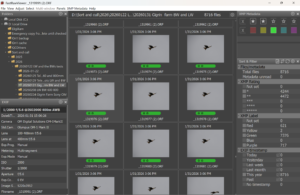
    FastRawViewer renders true RAW data rather than the embedded JPEG preview, pages through files at near-JPEG speed on a fast SSD, and has keyboard-driven colour labelling that makes it practical to work through tens of thousands of files without importing them into a DAM. At 50fps, one minute of shooting generates 3,000 images; the fine detail view via the Q key is the most reliable tool I have found for checking eye focus on birds during culling.

  • On1 Photo Raw – I’m all in

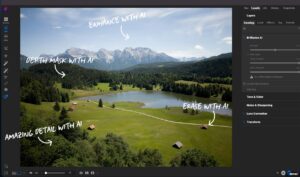
    After 16 years with Lightroom and 11 years with On1 Photo Raw running in parallel, I completed the move to On1 as my primary software and have not gone back. The core reason is architectural: On1 combines layers, filters, DAM, and fully non-destructive editing in a single application, whereas getting equivalent capability from Adobe requires both Lightroom and Photoshop — two programs with completely different interfaces and a file management overhead that compounds with every complex edit.

  • Matching the best camera system to the occasion

    I now classify photo trips by how critical the camera system is — from once-in-a-lifetime photo-focused trips where the best system with a backup is warranted, down to travel-first trips where even the smallest kit is fine. After testing multiple full-frame alternatives against the OM system, my conclusion is that the OM-1 covers BIF-first and multi-genre trips, the Z7 covers landscape and astro-first trips, and the OM-3 covers everything else.

  • The lessons from owning too many cameras

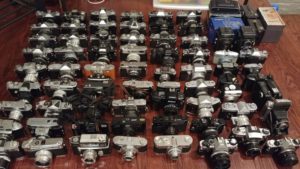
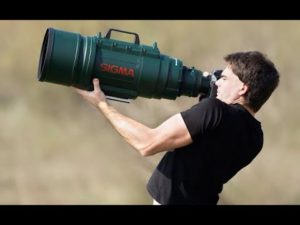
    After 56 cameras since the early 2000s — including DSLRs from Nikon and Canon, APS-C systems from Fuji and Sony, and multiple mirrorless generations — my conclusion is that APS-C offers no meaningful advantage over Micro Four Thirds while being nearly as heavy as full frame for travel. The practical test is airline carry-on limits: a full-frame system with a long telephoto exceeds them; the Olympus system fits comfortably, and I have not found a better all-round combination of features and portability at any price.

  • Are real cameras dead?

    Smartphones handle the vast majority of everyday photography — family, travel, documents — and for portraits of grandchildren in particular, the phone’s unobtrusiveness often produces better results than a dedicated camera. For wildlife, sport, long exposure, and large-format landscape printing, however, the physics of a smartphone sensor and lens still cannot deliver the reach, frame rate, noise performance, and resolution that the work requires.

  • State of the systems

    After buying the Sony A7R4 and 200-600mm intending to replace both my Nikon and Olympus systems with a single travel-friendly kit, the combination proved essentially non-functional for birds in flight — a problem well documented by others and not addressed by Sony. Extensive summer 2020 testing across every alternative confirmed the Olympus system as the best match for my requirements in every category: BIF focus accuracy, noise at matched apertures, long exposure capability, and travel weight.