Author: DMcA

  • Did YouTube damage the camera industry?

    The major YouTube camera channels are run by video producers, not photographers — their professional requirement is for sophisticated video features, and their advertising income depends on covering new products. Camera manufacturers responded to this increasingly important marketing channel by investing heavily in video capability for an audience that was actually shooting video on smartphones, and the R&D cost of those features was poured into a market contracting by 85%.

  • The lessons from owning too many cameras

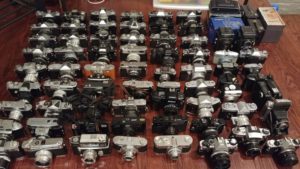
    After 56 cameras since the early 2000s — including DSLRs from Nikon and Canon, APS-C systems from Fuji and Sony, and multiple mirrorless generations — my conclusion is that APS-C offers no meaningful advantage over Micro Four Thirds while being nearly as heavy as full frame for travel. The practical test is airline carry-on limits: a full-frame system with a long telephoto exceeds them; the Olympus system fits comfortably, and I have not found a better all-round combination of features and portability at any price.

  • The decline of the professional photographer

    Stock photo royalties fell from an average of $280 per image in 2006 to approximately $4 by 2017 — a collapse that made stock photography commercially unviable for all but the highest-volume contributors. The rise of smartphones, affordable digital system cameras, and image-sharing platforms has eliminated the barriers to entry that once protected professional photographers, leaving only the highest-stakes genres like weddings and sports where the cost of amateur failure still creates a viable market.

  • The trials of being a Camera manufacturer

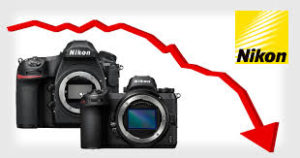
    System camera sales fell from 121 million units at peak in 2010 to 15 million by 2019, and Sony’s dominance of OEM sensor manufacturing means competitors must fund sensor R&D using camera revenues that are a fraction of what Sony earns from automotive, security, and smartphone sensors. Canon is the only remaining manufacturer producing its own high-end sensors; Olympus sold its camera division in 2020 rather than continue funding sensor development against that competition.

  • How Sony became the Kodak of the 21st century

    Kodak invented the digital sensor in 1975 and then lost its entire marketplace to digital competitors over the following 35 years; Sony invested in CMOS sensor technology from 1996 and now supplies the sensors used in cameras from Nikon, Fuji, Panasonic, and others, holding approximately 50% of the global image sensor market across all applications. The parallel with Kodak is exact: Sony’s sensors are the indispensable component for the camera industry in the same way Kodak’s film once was.

  • Are real cameras dead?

    Smartphones handle the vast majority of everyday photography — family, travel, documents — and for portraits of grandchildren in particular, the phone’s unobtrusiveness often produces better results than a dedicated camera. For wildlife, sport, long exposure, and large-format landscape printing, however, the physics of a smartphone sensor and lens still cannot deliver the reach, frame rate, noise performance, and resolution that the work requires.

  • More Richmond Park Pen Ponds

    More shots, this time in October 2020.
    Richmond Park, in the London Borough of Richmond upon Thames, was created by Charles I in the 17th century as a deer park. The largest of London’s Royal Parks, it is of national and international importance for wildlife conservation. The park is a national nature reserve, a Site of Special Scientific Interest and a Special Area of Conservation and is included, at Grade I, on Historic England’s Register of Historic Parks and Gardens of special historic interest in England. Its landscapes have inspired many famous artists and it has been a location for several films and TV series (credit – Wikepedia). The Pen Ponds are in the centre of the park and are a safe-ish haven for ducks, geese, swans, gulls and migratory birds. Only safe-ish because of the oafish behaviour of dog owners and the drunken hooligans of south London.


    Touch or click any image to go to a lightbox view and then touch the full screen icon in the top right hand corner to get the best viewing experience. And for information on the shot and the location, be sure to click the little ‘i’ icon

  • Hawk Conservancy Trust Kites

    Taken at the excellent Hawk Conservancy Trust, in Andover, Hampshire, UK. The trust both fulfils a conservancy role for birds of prey, particularly vultures, and has an education mandate with superb narrated flying displays three times per day. I use this location as a testing ground for comparing camera systems as there is a repeatable and reliable array of different flying types to test camera systems against. Along the way, I’ve ended up with quite a few shots of these Kites, doing what they like best.


    Touch or click any image to go to a lightbox view and then touch the full screen icon in the top right hand corner to get the best viewing experience. And for information on the shot and the location, be sure to click the little ‘i’ icon

  • Richmond park Pen Ponds

    Richmond Park, in the London Borough of Richmond upon Thames, was created by Charles I in the 17th century as a deer park. The largest of London’s Royal Parks, it is of national and international importance for wildlife conservation. The park is a national nature reserve, a Site of Special Scientific Interest and a Special Area of Conservation and is included, at Grade I, on Historic England’s Register of Historic Parks and Gardens of special historic interest in England. Its landscapes have inspired many famous artists and it has been a location for several films and TV series (credit – Wikepedia). The Pen Ponds are in the centre of the park and are a safe-ish haven for ducks, geese, swans, gulls and migratory birds. Only safe-ish because of the oafish behaviour of dog owners and the drunken hooligans of south London.


    Touch or click any image to go to a lightbox view and then touch the full screen icon in the top right hand corner to get the best viewing experience. And for information on the shot and the location, be sure to click the little ‘i’ icon

  • Hawk Conservancy Trust Falcons

    Part of the show at the excellent Hawk Conservancy Trust, in Andover, Hampshire, UK is flying these superfast falcons. The Lanner can exceed 100mph, and is a determined little bugger as you can see from it’s face. The Kestrel is not as fast, but much prettier imho, and conveniently hovers before diving. Getting a finger on any of them is a real photographic challenge as they are really small, really fast, and usually really far away. These are some of my best shots, and I’ll keep on trying.


    Touch or click any image to go to a lightbox view and then touch the full screen icon in the top right hand corner to get the best viewing experience. And for information on the shot and the location, be sure to click the little ‘i’ icon

  • Andover Sony

  • Gigrin Sony