-
-
-
-
EM1x and firmware 2 – great owl results with Pro Capture
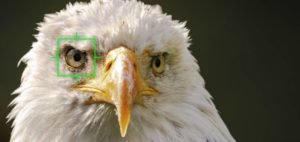
Using ProCapture L with Bird AI tracking on owls at the Hawk Conservancy Trust, the in-focus hit rate jumped to 48% — a substantial improvement over previous sessions where the owl arena’s short, fast, tree-interrupted flights made real-time focus acquisition nearly impossible. The combination of the pre-capture buffer and AI subject tracking is specifically what makes the difference: the camera is already tracking and buffering before you consciously decide to press the button.
-
HCT Owls
The excellent Hawk Conservancy Trust again, this time shooting owls. The owl display in the summer is at the end of the day, in quite a dark wood. It’s brilliant, but not too great for photography. In winter it’s the first show, and this time I was lucky enough to be there on a sunny day, and to have a great camera with me. I was using the Olympus E-M1x, which had just received a firmware upgrade. This was a testing session to see how the new setup worked, and I was quite pleased with the results.
Touch or click any image to go to a lightbox view and then touch the full screen icon in the top right hand corner to get the best viewing experience. And for information on the shot and the location, be sure to click the little ‘i’ icon -
Depth of field for birds in flight – good or bad?
Micro Four Thirds gives 4x the depth of field of a full-frame camera at equivalent subject magnification and aperture — which is an advantage for birds in flight because a wider depth of field is more tolerant of the small autofocus errors that are inevitable when tracking a rapidly moving subject. Full-frame’s shallower depth of field amplifies those same autofocus errors, producing more shots where the camera is close to focus but not critically sharp.
-
Dynamic Range on Olympus vs Sony cameras for birds in flight
At base ISO, the A9 has 1–2 stops more dynamic range than the EM1x, but at ISO 3200 where birds-in-flight shooting typically occurs, the difference narrows to around 0.5 stops — negligible for most subjects. The 1.3-stop lens speed advantage of the OM pro telephoto lenses over the Sony 200-600mm effectively eliminates any remaining DR gap in practice when the comparison is made at matched apertures.
-
Noise on Olympus vs Sony cameras for birds in flight
The EM1x’s sensor has 0.5–1 stop higher read noise than the Sony A9, but system-level noise — accounting for lens speed, IBIS, and in-camera processing — is within 0.5 stops at the ISOs relevant to birds-in-flight shooting. The comparison most people make is unfair: they compare the A9 with a fast prime against the EM1x with a matched prime, where the Sony gathers more light per pixel, and then attribute the cleaner result entirely to sensor size.
-
EM1x and new firmware 2.0 operation for birds in flight
I shoot the EM1x in manual with auto ISO, wide open, at 1/2000s minimum, with the rear dial set to exposure compensation and highlight/shadow blinkies as the only viewfinder overlay — a setup that lets me adjust exposure directly on the bird without any mode switching. Four custom presets (C1–C4) cover every BIF scenario, and ProCapture L at 15fps with 15 pre-shutter frames is assigned to C3 for takeoffs and landings.
-
New EM1x firmware 2.0 focus tests for Birds in Flight | mcaughtry.photo
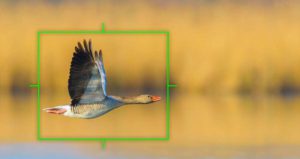
The EM1x firmware 2.0 Bird AI tracking is a genuine improvement for stationary and slow-moving birds — the owl hit rate jumped to 48% in a session where previous sessions had produced far less — but in the fast-BIF sessions at the Hawk Conservancy Trust, it underperformed standard CAF: 45% versus 61% in the morning session. My conclusion is that Bird AI tracking works best combined with ProCapture L for subjects about to take off, not as a replacement for traditional CAF on birds already in fast flight.
-
Sony A9 vs Olympus E-M1x focus accuracy tests
Over four days at the Hawk Conservancy Trust testing the Sony A9 and EM1x side by side, the A9 led in the morning focus-lock sessions (72% vs 61%) but the EM1x led in the afternoon focus-acquisition sessions (45% vs 39%). The overall averages were nearly identical — 51% EM1x, 49% A9 — but the EM1x achieved this with 600mm reach while the A9 was effectively capped at 600mm; with the 1.4TC at 900mm f9, the Sony hit only 34%.
-