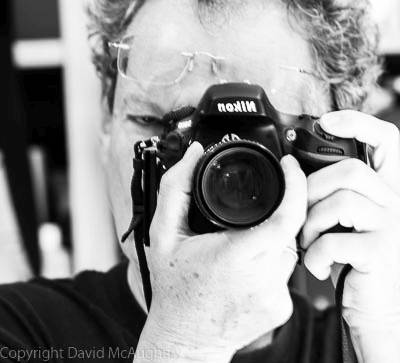
Author: DMcA

  • Sri Lanka – temples

    I have seen very many temples in my time, and in general I have not got great photos from them other than as a touristic record. That’s not because of the temples which are mostly gorgeous and atmospheric. It’s more because I am not an architectural photographer, and I can not find ways to make an architectural shot look interesting in its own right as a photo.


    As a result I didn’t plan any temple visits, and in general avoided the towns and cities with famous sites. However on the trip I came across a couple of temples which I did want to photograph, for various reasons. I don’t claim to have solved my temple problem, but I got some shots that I thought were good enough to put in an album.


    The first of these was the Nagapooshani Amman Kovil, a magnificent Hindu temple on Nainativu Island, known for its vibrant Dravidian architecture and spiritual importance. The colorful gopuram decorated with intricate carvings is breathtakingly intricate and alive with energy. It also has a rather humorous sacred cow in the entranceway, which is a favorite with local crows.


    The second was the amazing cave temple at Dambullah. I have never seen a temple quite like this one. It is a magnificent rock-cut monastery complex built into a towering 160-meter granite rock and dates back to the 1st century BCE. The site comprises five primary cave sanctuaries filled with a remarkable collection of 153 Buddha statues, depictions of Sri Lankan kings, and intricate murals covering over 2,000 square meters of cave ceilings. Although undeniably a tourist site, there is a serenity and atmosphere here that is quite moving.


    Touch or click any image to go to a lightbox view and then touch the full screen icon in the top right-hand corner to get the best viewing experience. And for information on the shot and the location, be sure to click the little ‘i’ icon

  • Sri lanka – waterfalls

    Before going to Sri Lanka, I researched the work of local photographers, to explore locations and understand what styles worked best. Without doubt the best I found was Amila Hewagama, whose amazing Lankascape web site showcases his impressive artistry and some amazing Sri lankan scenery.


    I made contact with Amila before setting off, and he very kindly gave me some excellent advice about where to go, and the practicalities of shooting waterfalls in Sri Lanka, I didn’t cover the wide range of falls that Amila has shot, but I photographed six in total and they are shown in this album


    One of the features of Amila’s shots is that he gets quite close to the falls, and in a series of moderately risky manoeuvres, I got into the waterfall in several of them, enabling close up shots with some drama and intensity. Shooting this close was a challenge to the camera system (and the photographer), as to put it mildly as it was pretty wet in there, but the OM-3 and my non-waterproofed lenses worked magnificently. I am also indebted to the wonderful Ranil for helping me and guiding me so well – I would not have wanted to be this adventurous on my own.


    All these shots were taken at longish exposure times (around 1/5s), hand-held, with a variable ND filter to get the correct exposure. In the most intense situations, in Bombaru Ella,and Diyaluma falls the spray was so intense I could not see the camera settings or much of the scene, a situation that presented unique challenges.


    I used the tiny Olympus 9-18mm (18-36mm FFE) wide angle zoom with the Panasonic 14-140mm (28-280mm FFE) travel zoom for these shots. Neither are classed as pro lenses, neither are waterproofed, and most Olympus/OM photographers disregard them for serious work. However, they continue to perform for me, and generate images as crisp and true as my pro lenses.


    Touch or click any image to go to a lightbox view and then touch the full screen icon in the top right-hand corner to get the best viewing experience. And for information on the shot and the location, be sure to click the little ‘i’ icon

  • Sri lanka – Seascapes

    The fourth leg of my Sri Lankan trip was to drive more or less the entire navigable length of the Sri lankan south coast, from Katamiya in the east to Bentota in the west, a distance of around 200km once all the wrinkles and detours are taken into account.


    The south coast is where all the photos you associate with Sri Lanka are taken. The deserted endless beaches backed by palm trees, with gorgeous sunsets as a backdrop. As ever the reality is not like that, but for the most part the beaches are genuinely gorgeous. What the pictures don’t tell you is the way the roads and development behind the palm trees has been handled, which is often not very attractive, and not in keeping with the beauty of the shoreline.


    While the South Coast beaches are great for beach lovers, they don’t offer a great deal for my style of long exposure photography, except for a few areas of rocky outcrops. This album contains the shots I took along the way, hopping out of the car whenever a scene looked interesting, and staying overnight for three areas, Kalamtiya, the Frog Rock, and Bentota.


    Information about the locations where the shots were taken is provided in the info boxes via the “i” symbol. Here you can also indicate if you like a photo by clicking the heart icon. I would be interested if you could do this for photos you like, to give me an idea of which photos work best (although I personally like them all, or they would not be in the album).


    Touch or click any image to go to a lightbox view and then touch the full screen icon in the top right-hand corner to get the best viewing experience. And for information on the shot and the location, be sure to click the little ‘i’ icon

  • Sri Lanka – People

    As ever the best guide to the heart of a country for me is in the faces and particularly the eyes of its people. Sri Lanka is remarkably similar to Cambodia and Vietnam in that unspeakable horrors took place in the lifetime of a large part of the population. This was particularly true in Jaffna and the north, but the whole country experienced similar levels of brutality in the insurrections of 1971 and 1987 of the marxist JVP party.


    In addition to this, people in Sri Lanka often have hard lives, and the combination of all these experiences make their faces infinitely more interesting than the bland, overfed, smug slices of bread evident in the faces on most European city streets.


    These photos were taken in Colombo, Jaffna, and Galle, and are mostly street portraits, revealing something I hope about the dignity, and basic beauty of the Sri lankan people. There are more images than I would normally include in an album, but I cannot find a way to make an even split. Hopefully paging through them all will not take too long.


    Information about the locations where the shots were taken is provided in the info boxes via the “i” symbol. Here you can also indicate if you like a photo by clicking the heart icon. I would be interested if you could do this for photos you like, to give me an idea of which photos work best (although I personally like them all, or they would not be in the album).


    Touch or click any image to go to a lightbox view and then touch the full screen icon in the top right-hand corner to get the best viewing experience. And for information on the shot and the location, be sure to click the little ‘i’ icon

  • Sri Lanka – Landscapes

    Sri Lanka is rich in opportunities for landscape photography. These shots were taken in the centre of the country, firstly at the amazing natural rock landmark of Sigiriya, then in the mountainous tea growing area southwest of Kandy around Nuwara Eliya, and finishing up at the mountain town of Ella.


    I had noticed from looking at photos of the tea growing areas that there were similarities to the landscape of Moravian Tuscany in Czechia. I was interested to see if the techniques that I had picked up in my photographic visits earlier in the year could be applied to the tea plantations. This particularly involved using long focal lengths and shooting across valleys to compress the perspective.


    The results exceeded my expectations firstly because the landscape is inherently beautiful and secondly because the patterns and textures created by the intricate rows of tea bushes can make some very appealing geometric shapes. Ranil, my excellent driver and guide, quickly understood what I was looking for and took me to some excellent locations from which I could explore the shapes and patterns of the landscape.


    Information about how some of the photos were taken is provided in the info boxes, particularly the Sigiriya ones – instructions about how to access them are given below.


    Touch or click any image to go to a lightbox view and then touch the full screen icon in the top right-hand corner to get the best viewing experience. And for information on the shot and the location, be sure to click the little ‘i’ icon

  • Sri Lanka – Lunaganga

    Bentota on the south west coast of Sri Lanka, is the location of the home and gardens of the celebrated Sri Lankan architect, Geoffrey Bawa.


    The story of Lunuganga began in 1948, when Bawa purchased a derelict rubber plantation on a peninsula in the Dedduwa Lake. What started as a modest desire to create a weekend retreat eventually transformed into a lifelong project spanning five decades. This “tropical version of an Italian Renaissance garden” became Bawa’s living laboratory, where he experimented with the concepts of Tropical Modernism—a style that seamlessly blends indoor and outdoor spaces. It wasn’t just a home; it was a physical manifestation of Bawa’s soul, evolving continuously until his passing in 2003.


    The structures at Lunuganga reflect understated elegance and architectural recycling. The main house, originally a simple colonial bungalow, was reimagined with soaring ceilings, internal courtyards, and wide verandas that invite the lake breeze. Over the years, Bawa added several outbuildings, including the Cinnamon Hill House, the Gallery, and the Gatehouse. Each structure is strategically positioned to anchor specific views, utilizing a palette of black and white floor tiles, antique Dutch-colonial furniture, and contemporary art. The houses are designed to be porous, ensuring that one never feels truly separated from the surrounding landscape.


    The gardens at Lunuganga are perhaps the most celebrated landscape in Sri Lanka, designed as a series of “outdoor rooms” that manipulate perspective and light. Unlike the manicured symmetry of Western gardens, Lunuganga feels wild yet deeply intentional. Key features include the Water Garden, the Broad Walk, and the iconic Cinnamon Hill, where a single jar stands against the horizon. Bawa famously used “civilized wilderness” to frame views of the lake and the distant Katugoda stupa. The interplay of shadows from ancient frangipani trees, the stillness of lily ponds, and the various shades of green create a sensory experience that feels both ancient and timeless.


    Touch or click any image to go to a lightbox view and then touch the full screen icon in the top right-hand corner to get the best viewing experience. And for information on the shot and the location, be sure to click the little ‘i’ icon

  • Sri Lanka – the Brief garden

    The Brief is a remarkable garden of great style, charm and peace, set in the hills behind the town of Bentota, on the South West coast of Sri Lanka. It was created by Bevis Bawa, a celebrated artist and garden designer, and the brother of Geoffrey Bawaa, Sri Lanka’s greatest architect.


    Somerset Maugham described the Brief thus: “The house is a series of rambling courtyards, patios, loggias and terraces and filled with furniture – old and new indigenous and exotic – all blending together to make it one off the loveliest houses in the East.” He went on: “The harmony of the garden at Brief is unexpected because, as Bevis explains it, it consists of several small gardens – thought out by him in various moods and at various times during its growth over the last forty years. The result is a climax of loveliness, a proclamation that nature can triumph over the hideous inventions of mankind.” I couldn’t agree more.


    The unusual name is often described as being from a successful court case won by his father, which paid for the original estate. However, Bevis himself had a different explanation: “….a novelist who was a favourite of mine had named three country mansions ‘Vantage’, ‘Usage’ and ‘Brief’, which tickled my fancy. The first sounded as if I had taken advantage. Usage sounded awfully like a brothel. So therefore, it had to be ‘Brief’, and still is.”


    Touch or click any image to go to a lightbox view and then touch the full screen icon in the top right-hand corner to get the best viewing experience. And for information on the shot and the location, be sure to click the little ‘i’ icon

  • Sri lanka – south coast
    birds and reptiles

    After an amazing sojourn in the central tea growing area, my excellent driver and guide Ranil took me down to the south-east coast and the Kalametiya bird sanctuary. This tranquil reserve has been protected since 1938 and is one of the oldest in the country. It consists of an extensive set of linked coastal lagoons and mangrove swamps and is home to around 150 species. We took an early morning board ride, and once again. I was able to get some quite nice shots of your feathered tweeters.


    My final brush with Sri lankan wildlife came after a long drive plus train journey to Bentota by way of Galle. Apart from being the location of many beautiful buildings designed by the great Sri Lankan architect Geoffrey Bawa, Bentota features an extensive inland lagoon with a surprising array of lizards and crocs as well as abundant bird species. We only spent a few hours toottling about the lagoon, but several decent wildlife shots resulted.


    This trip to Sri Lanka was a revelation in the richness and diversity of its wildlife, and has only served to whet my appetite to return and explore more of its famous wildlife reserves and national parks.


    Touch or click any image to go to a lightbox view and then touch the full screen icon in the top right-hand corner to get the best viewing experience. And for information on the shot and the location, be sure to click the little ‘i’ icon

  • Sri lanka – west coast wildlife

    On the next leg of our 2025 Sri Lanka visit, four of us with the excellent Ranil as driver and guide, travelled up the west coast of the island, from Colombo to Jaffna, stopping at two notable wildlife spots on the way.


    The first of these was the Anavilundawa bird sanctuary. This 3,5000 acres wetland consists of a group of shallow cascading tanks, ranging from 12 to 50 ha in extent, built around 1140 AD by King Parakramabahu the Great. We only stayed a short while, but there was much to see, and the first 5 shots of the album are from there.


    The next day was a safari trip through Wilpattu National Park, the largest and one of the oldest national parks in Sri Lanka. It extends over an area of 1,300 sq km, and is notable for its 100 plus “Willus” – natural, sand-rimmed water basins or depressions that fill with rainwater. It has a wide range of bird and animal species, but is most famous for its leopard population. Although guides assure visitors that the place is stiff with leopards, in fact there are probably no more than 150 in the 1350 acres reserve, or on average, one per 9 sq km.


    However, as is usual in these parks, if a leopard is seen, the word gets out and all the jeeps converge a respectful distance away from the animal. We were lucky to catch a long-distance glimpse of our leopard, but thanks to the long range of my new zoom lens, I was able to get quite a nice shot of it, as well of the other surprisingly diverse bird and mammal population.


    Touch or click any image to go to a lightbox view and then touch the full screen icon in the top right-hand corner to get the best viewing experience. And for information on the shot and the location, be sure to click the little ‘i’ icon