OM Pro Zooms – the effect of teleconverters, ISO and background on focus accuracy
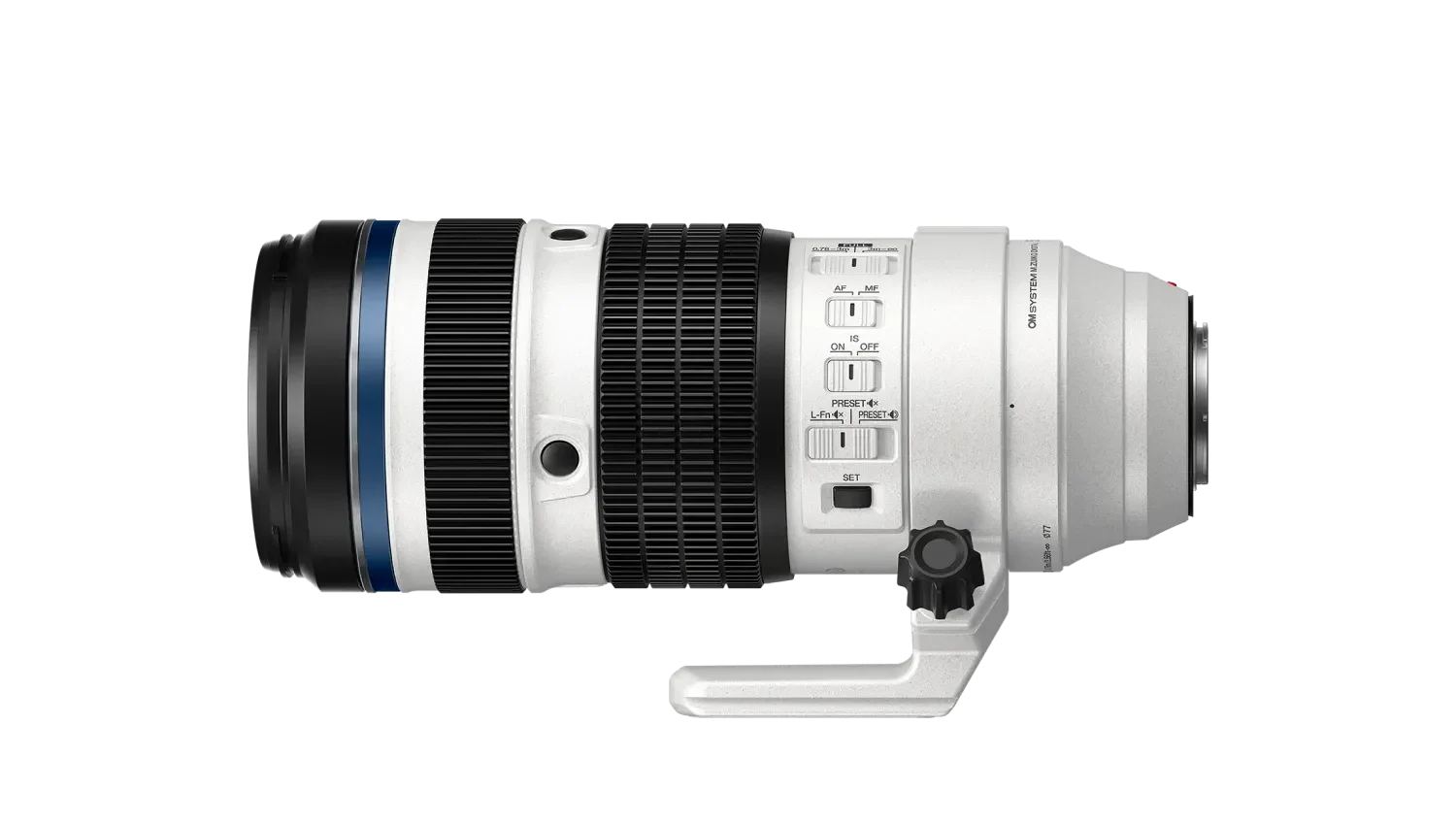
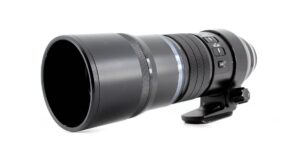
The latest OM Pro zooms are the 50-200mm f2.8 (Little White) and the 150-400mm f4.5 TC (Big White). They are, in my opinion, and in the view of many, the greatest wildlife zooms available on any system.
Last year, I purchased the Little White and have taken over 100,000 photographs with it in Cape Town (twice), Sri Lanka, and Costa Rica. It is an astonishing lens. I wanted to know how it stacked up against the Big White at longer focal lengths, so I have done a great deal of testing. During the testing, I gained some insights into the major factors that affect focus accuracy, and they are described here. Specifically, I present data on the effect of teleconverters, ISO and background on focus accuracy on the OM Pro Zooms. In a separate post, I compare the outright resolution of LW to the BW, and to the top two wildlife zooms from Sony.
If you would rather head straight to a concise summary, the TL;DR is at the foot of the page — or jump directly to the FAQ.
Little White – great with the MC14, but “there’s something off with the MC20”
OM system lenses have a Full Frame Equivalent (FFE) focal length of twice the physical focal length. So the LW has a focal length of 100-400mm FFE at f2.8, and the BW is a 300-800mm FFE (1000mm FFE with the built-in teleconverter). Olympus makes two teleconverters of excellent quality: the first, and most widely used, is the MC14, which increases the focal length by 1.4 and the minimum aperture by 1 stop, making the LW into a 280-560mm FFE f4 lens. This is extremely fast, and most reviewers agree that image quality is almost unaffected by the addition of the teleconverter.
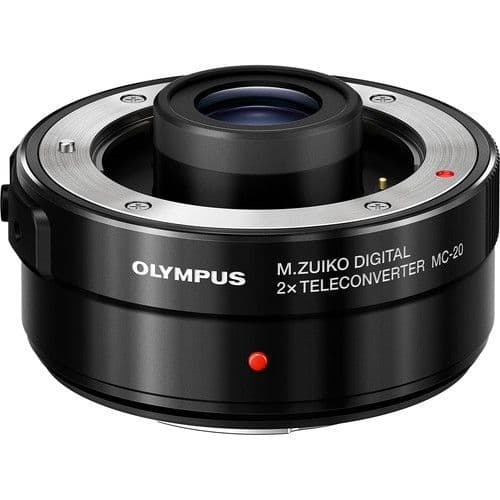
However, my most used focal lengths are between 600 and 800mm FFE, and for that, you would need the MC20 teleconverter, which doubles the focal length and doubles the minimum aperture. With the MC20, the LW becomes a 200-800mm FFE f5.6 lens that weighs just over 1kg. There is nothing that remotely approaches this from any other manufacturer.
But there is a fly in the ointment, at least from the perspective of lens reviewers. It’s a trope in the industry that 2x teleconverters are a step too far. Every reviewer of the LW has said words to the effect that: “It’s great with the MC14, but there’s something off with the MC20”. None of them ever actually tests this, but they believe it must be true. This is the inverse of the great audiophile trope of expensive hi-fi connection cables. Extensive testing has shown that above the level of a £5 Amazon generic cable, there is no benefit of pure silver or oxide-free cables, which can cost up to £4000. Despite this, audiophile reviewers convince themselves that such cables sound better. Both are examples of positive bias in unstructured reviews – “it should be better/worse, therefore I think I can see/hear it.”
Let’s actually do some testing instead
The LW is incredibly fast at 100-400mm FFE f2.8 for rainforest or other close-in dark situations, very fast up to 600-ish mm FFE f4, and still an extremely fast long zoom at 800mm FFE f5.6 (only the BW Zoom is faster at 800mm FFE, and only by 0.6 stop). In good light, I keep the MC20 on all the time. However, I am not immune to the trope about the MC20, and I worry about what I am sacrificing in terms of focus accuracy and lens sharpness.
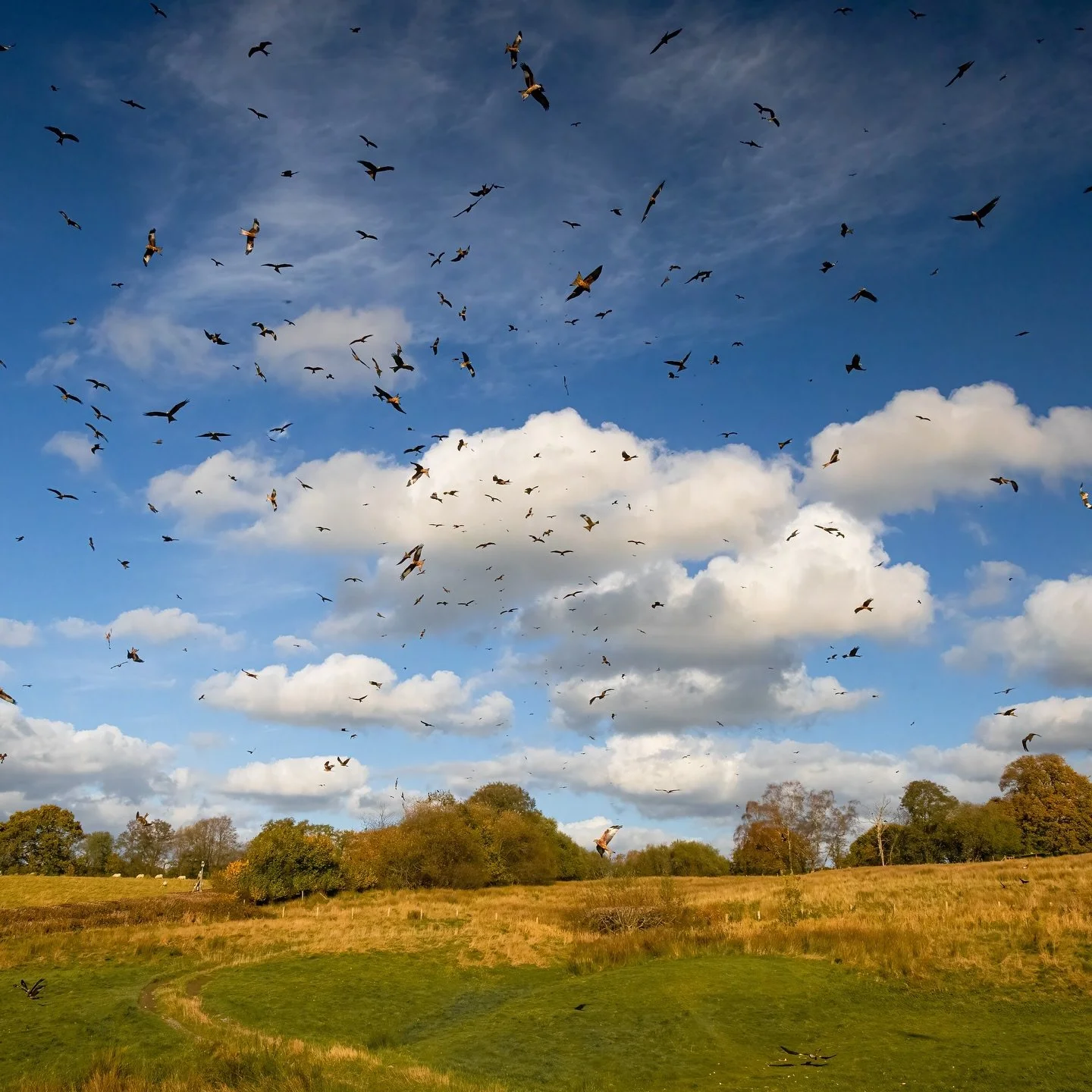
There is only one way to resolve this: do detailed testing. To test the focus accuracy of a lens, you need a plentiful and consistent supply of flying birds. In the past, I have used the estimable Hawk Conservancy Trust (HCT) near Andover, as it has a plentiful supply of birds to shoot. The problem with the HCT is that the variety and speed of the birds are variable and change radically during the day as different species of birds fly. Its therefore impossible to test two cameras/lenses in the same circumstances on the same day.
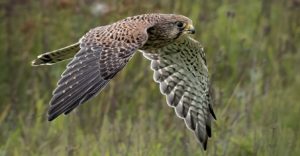
Instead, I am now using the amazing Gigrin farm. This has been an official feeding station for the Red Kite since 1992/3, when this beautiful bird was on the verge of extinction in the UK. Gigrin was key in saving the UK Red Kite population, and has now become an attraction in its own right, with a Kite feeding every afternoon that attracts hundreds and sometimes thousands of Kites. It’s near the lovely town of Rhyader, and close to the beautiful and historic Elan Valley, and I highly recommend it for a visit.
The tests
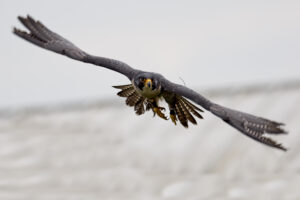
Gigrin has a number of specialist hides for photographers. The highest one provides an excellent vantage point for flying Kites, which are often at eye level. Every afternoon at 2pm, a tractor pulls round and disgorges piles of chicken bits. Kites are already circling at this time, and soon hundreds are circling and diving for food.
Interestingly, the Kites stay for several hours, and after 90 minutes or so, start to swoop and dive just for the fun of it (or so it appears). This provides an excellent and repeatable setup for testing focus accuracy.
For these tests, I used an OM1 Mk II set up with bird AF subject detect active, and the shutter at SH2 at 50fps and mostly 1/2000. The camera was in full manual, with the LW/MC20 wide open at f5.6, and the BW also wide open at f4.5. Using the technique described in this post, I varied the ISO to ensure the bird was exposed correctly, usually at the beginning of each burst. The goal, which is usually (but not always) achieved, is to get the bird correctly exposed as opposed to an average exposure for the whole scene. Because I was continuously varying the ISO for the lighting on the bird, it was a reasonable proxy for available light. ISO varied between 1200 and 5000.
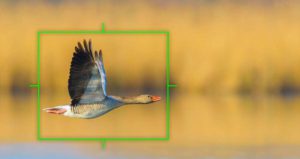
Because the sky can be full of Kites, it’s necessary to focus on a specific one, so I set the focus area to the central “large” focus area rather than “all”, as this works best at Gigrin.
I took around 13,500 images overall, split more or less evenly between the two lenses.
The results – overview
The Kites are to put it mildly, not disciplined, and they veer and wheel wildly and abruptly. It’s quite possible to not have a bird in the centre of the frame when shooting, and I removed these images from the evaluation set, along with images where there was no bird at all due to a burst overrun onto a blank area.
After doing this, there were over 4,000 images for each lens. I evaluated focus using the excellent FastRawViewer (FRV) software. This enables the Raw image to be evaluated rather than the embedded or sidecar JPG. This is particularly key to enabling RAW exposure adjustments, shadow boost, and zooming at full resolution, all of which help make a better assessment. FRV is extremely fast – you could not do this speed of analysis on Raw files with any of the commercial RAW processors.
I used the same approach for all images, without knowing what the lens was or the shooting conditions, and went through the images 3 times (not a great deal of fun). Here are the results in summary.
As you can see, both lenses behaved superbly and very similarly, with the LW plus MC20 at 92% hit rate and the BW at 94%.
| Lens | Shots in frame | Out of focus | % In focus |
|---|---|---|---|
| 150–400mm f4.5 TC (Big White) | 4,244 | 254 | 94% |
| 50–200mm f2.8 + MC20 (Little White) | 4,472 | 367 | 92% |
| Total in frame | 8,716 | 621 | 93% |
| Total shots fired (including out-of-frame): 13,559. Camera: OM-1 Mark II, SH2 mode, 50fps, 1/2000s, Bird AF subject detect active, central large focus zone selected. | |||
Let’s look a bit more deeply at the results – the effect of teleconverters, ISO and background on focus accuracy
The Kites behave differently at different times of the afternoon. Sometimes they are all circling, and sometimes they are all diving. In addition, the weather that afternoon was overcast and got markedly darker at times. This means that the ISO and the background changed markedly during shooting.
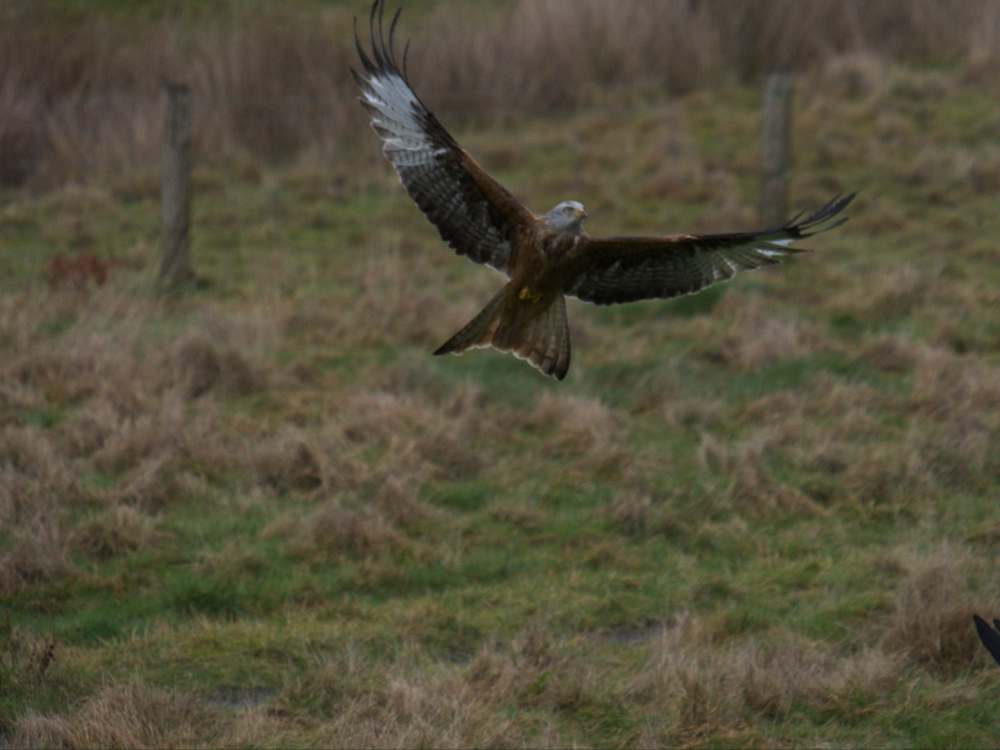
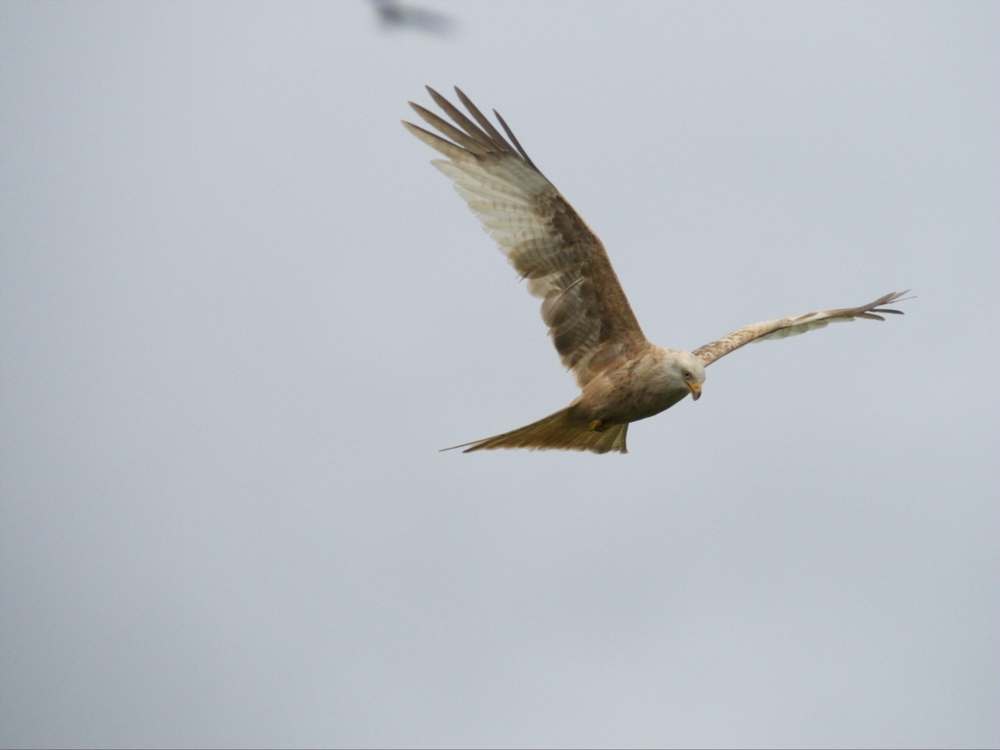
Using ACDSee 2026, which has powerful metadata tagging and analysis capabilities, I did a further deep dive into the results. This time, I segregated the data by the background type and ISO. There were two types of background – a clear background with the bird visible against a white or blue sky (ideal for focus acquisition) or a complex or dark background, where the well camouflaged Red Kite is flying low and fast against a dark and mottled background (much more difficult).
Now it is impossible to predict how the kites are going to fly, but with over 4,000 shots per lens I got a good distribution. Here are the detailed results. This is a complex table. To see it more readably, just click. But first, let me explain the table and the results.
The data is subdivided by ISO and by the background type for each lens. If you look at the bottom three rows, you can see that 2,043, or around half of the LW shots were taken at ISO 5000, and the average focus accuracy was lower, at 88%. But looking across the table, we can see that 967, or around 43% of the LW shots were taken at this ISO against a complex or dark background (CDB). For these shots, the hit rate dropped to 81%. Against a clear sky, the hit rate shot up to 94%.
The same result can be seen for the BW. Nearly 71% of the shots were taken at ISO 3200 (just how the day and the conditions worked out). Overall, it did slightly worse at 3200 than the LW at 93% hit rate vs 94% for the LW. But against a complex or dark background (CDB) the hit rate dropped to exactly the same 81% as the LW.
One thing that should hopefully also be clear from this table is that ISO does not affect the focus accuracy for these lenses up to ISO 5000. Whatever the ISO, the hit rate is between 81 and 88% for complex backgrounds and 91 to 97% for clear backgrounds.
| Lens | ISO band | Total shots | OOF | % IF | Complex / Dark Background | Clear Background | ||||
|---|---|---|---|---|---|---|---|---|---|---|
| Shots | OOF | % IF | Shots | OOF | % IF | |||||
| Big White 150–400mm f4.5 TC |
1250–2500 | 799 | 48 | 94% | 91 | 13 | 86% | 708 | 35 | 95% |
| 3200 | 3,022 | 202 | 93% | 401 | 77 | 81% | 2,621 | 125 | 95% | |
| 4000 | 290 | 4 | 99% | 41 * | 0 | 100% * | — | — | — | |
| 5000 | 133 | 0 | 100% | 0 | — | — | 133 | 0 | 100% | |
| Little White + MC20 50–200mm f2.8 + MC20 |
1250–2500 | 934 | 14 | 99% | 0 | — | — | — | — | — |
| 3200 | 1,035 | 59 | 94% | 291 | 39 | 87% | 744 | 20 | 97% | |
| 4000 | 460 | 50 | 89% | 243 | 30 | 88% | 217 | 20 | 91% | |
| 5000 | 2,043 | 244 | 88% | 967 | 183 | 81% | 1,076 | 61 | 94% | |
| Big White — all ISOs | All | 4,244 | 254 | 94% | 533 | 90 | 83% | 3,462 | 160 | 95% |
| Little White + MC20 — all ISOs | All | 4,472 | 367 | 92% | 1,501 | 252 | 83% | 2,037 | 101 | 95% |
| * BW ISO 4000 CDB result of 100% reflects a sample of only 41 frames and should not be treated as representative — see text for discussion. LW ISO 1250–2500 CB sub-split and BW ISO 4000 CB sub-split were not separately recorded in the source data. BW ISO 5000 CDB count is 0: all 133 shots in this band were against a clear background. | ||||||||||
Note on the overall 2% gap between the lenses. The LW had nearly three times the proportion of complex or dark background shots as the BW — 1,501 out of 4,472 (34%) versus 533 out of 4,244 (13%). Since background type is the dominant factor in focus accuracy, this difference in dataset composition accounts for most of the gap in overall hit rates. When comparing like for like — clear background against clear background, or complex against complex — both lenses perform at essentially the same level.
There is an outlier result of 100% hit rate for the BW with complex backgrounds at ISO 4000, but this is simply because there were only 41 photos in total in the sample, and all of them were in focus. With a bigger sample size, there is no doubt in my mind that the results would be consistent with the other ISOs.
Effect of the MC14 and MC20 on LW focus accuracy
In November 2025, I took the LW by itself to Cape Town to shoot a wide variety of birds, including Kingfishers flying fast in quite low light. I used the MC14 and MC20 almost equally. They showed exactly the same focus accuracy. The reason for the lower hit rate was because the background for almost half the shots (Kingfishers etc) was against a complex or dark background,
| Teleconverter | Shots in frame | Out of focus | % In focus |
|---|---|---|---|
| MC14 (1.4×) | 3,917 | 448 | 88.6% |
| MC20 (2×) | 3,811 | 443 | 88.4% |
| Total in frame | 7,728 | 891 | 88.5% |
| Total shots fired (including out-of-frame): 10,937. The 0.2 percentage point difference between the two teleconverters is within normal statistical variation and is not meaningful. | |||
Key insights on the effect of teleconverters, ISO and background on focus accuracy for LW and BW
- The focus accuracy of the LW+MC20 and the BW is essentially identical.
- The type of teleconverter makes no difference to focus accuracy – MC 20 is as accurate as MC14
- ISO has no, or minimal effect on hit rate, no matter what the background.
- The key factor affecting hit rate is the background. Against a clear sky, you can expect a hit rate of around 95% for the BW or LW. Against a dark or complex background, it will drop by 10% roughly, and you can expect an 85% rate for both.
Comments on these insights
The LW is an astonishing lens. Its focus accuracy is exemplary, and right up there with the BW. Several weeks after these tests, I travelled to Gigrin again, this time with the Sony A7V, the Sony 200-600 and 400-800 zooms, plus the LW and BW for a monster competitive shootout. The OM1 Mk II plus LW and BW was exactly as accurate as the latest Sony AI bird AF camera, with Sony’s latest and best zooms. I will publish the results in the next post.
I also noticed the effect of background on the Sony accuracy, just as for the OM lenses. Unfortunately, unlike FRV, ACDSee 2026 still does not support the A7V files, so I cannot easily do the tagged analysis. I will publish this soon, however, one way or another.
Some might ask about higher ISOs than 5000. Speaking personally, the reason I use ISO 10,000 and occasionally greater is that I am photographing very fast birds, at 1/4000 second. The available light is the same as ISO 5000 at 1/2000. So the impact should be minimal on accuracy, and that is borne out by my experience.
The Big White Lens was borrowed from the excellent (and extremely patient) RP, and is an original Japanese-manufactured version, owned from new, treated extremely well, and in mint condition.
Overall, I will continue to use the LW for all my wildlife and bird photography. It’s light, fast, and as sharp and accurate as any competitive zoom lens. You give up nothing with the LW, and you gain the superlight weight, which, in my opinion, makes it the best lens for birds in flight available on any platform.
TL;DR
- The OM 50–200mm f2.8 (Little White) with the MC20 teleconverter achieves a 92% focus hit rate across over 4,400 frames, versus 94% for the 150–400mm f4.5 (Big White). The 2% gap is largely explained by the LW having nearly three times the proportion of complex or dark background shots in its dataset (34% vs 13%) — when background type is controlled for, the two lenses perform essentially identically.
- The MC14 and MC20 teleconverters show no measurable difference in focus accuracy (both 88–89% in a separate 7,700-frame Cape Town dataset).
- ISO appears to have minimal effect on hit rate across the range tested (ISO 1250–5000) for either lens.
- Background type appears to be the dominant variable: against a clear sky both lenses achieve around 95%; against a complex or dark background that may drop to approximately 81–83%.
- The widely repeated claim that 2× teleconverters degrade focus performance is not supported by the data.
Frequently asked questions
Does the MC20 2× teleconverter degrade autofocus accuracy on the Little White?
These tests show it does not. Across nearly 7,700 frames in Cape Town, the MC14 and MC20 produced focus accuracy of 88.6% and 88.4% respectively — a difference of 0.2 percentage points, well within statistical noise. The industry trope that 2× teleconverters are a step too far is not borne out by data.
Why is the overall LW+MC20 hit rate 2% lower than the Big White in the Gigrin tests?
Almost entirely because of dataset composition. The LW dataset had 34% complex or dark background shots versus only 13% for the BW — and background type is by far the dominant factor in focus accuracy. When you compare the two lenses on like-for-like backgrounds (clear vs clear, complex vs complex), the results are essentially identical at around 95% and 81–83% respectively.
What effect does ISO have on focus accuracy for these lenses?
Minimal to none, up to ISO 5000. Whatever the ISO band tested, the hit rate ranged between 81–88% for complex or dark backgrounds and 91–97% for clear backgrounds — with no consistent trend as ISO increased. This makes intuitive sense: autofocus speed depends on contrast and subject brightness, not on the camera’s noise amplification setting.
How was focus accuracy assessed, and why not use the camera’s in-focus indicator?
All assessment was done manually on RAW files using FastRawViewer, which allows full-resolution zoom with RAW-level exposure adjustment and shadow boost. Each image was reviewed three times independently. The camera’s in-focus indicator is unreliable for continuous AF on fast-moving subjects — it can flag shots as in-focus that are clearly not when inspected at pixel level on the RAW file.
Why use Gigrin Farm rather than other BIF test locations?
Gigrin provides a consistent and repeatable supply of fast, erratic-flying Red Kites every afternoon from 2pm, in large numbers and across several hours. The Hawk Conservancy Trust, used in earlier tests, varies too much in bird species, speed, and quantity across the day to allow valid comparisons of two different lens systems. Gigrin’s feeding session effectively standardises the test conditions.
Related Posts — OM vs Sony Series
Resolution
OM vs Sony Wildlife Zooms: Resolution Shootout
Focus Accuracy
Focus Accuracy Shootout: OM-1 II vs Sony A7V
Dynamic Range & Noise
Dynamic Range and Low-Light Noise: OM vs Sony
Lens Handling
OM and Sony Wildlife Zooms: Lens Handling
Zooms vs Prime
Sony Wildlife Zooms vs the 600mm f4 GMaster Prime
2026 Summary
OM and Sony Wildlife Zooms: 2026 Summary
Teleconverters & Focus
OM Pro Zooms: Effect of Teleconverters, ISO and Background on Focus Accuracy