Sony Zooms vs the 600mm f4 Prime—comparative image quality
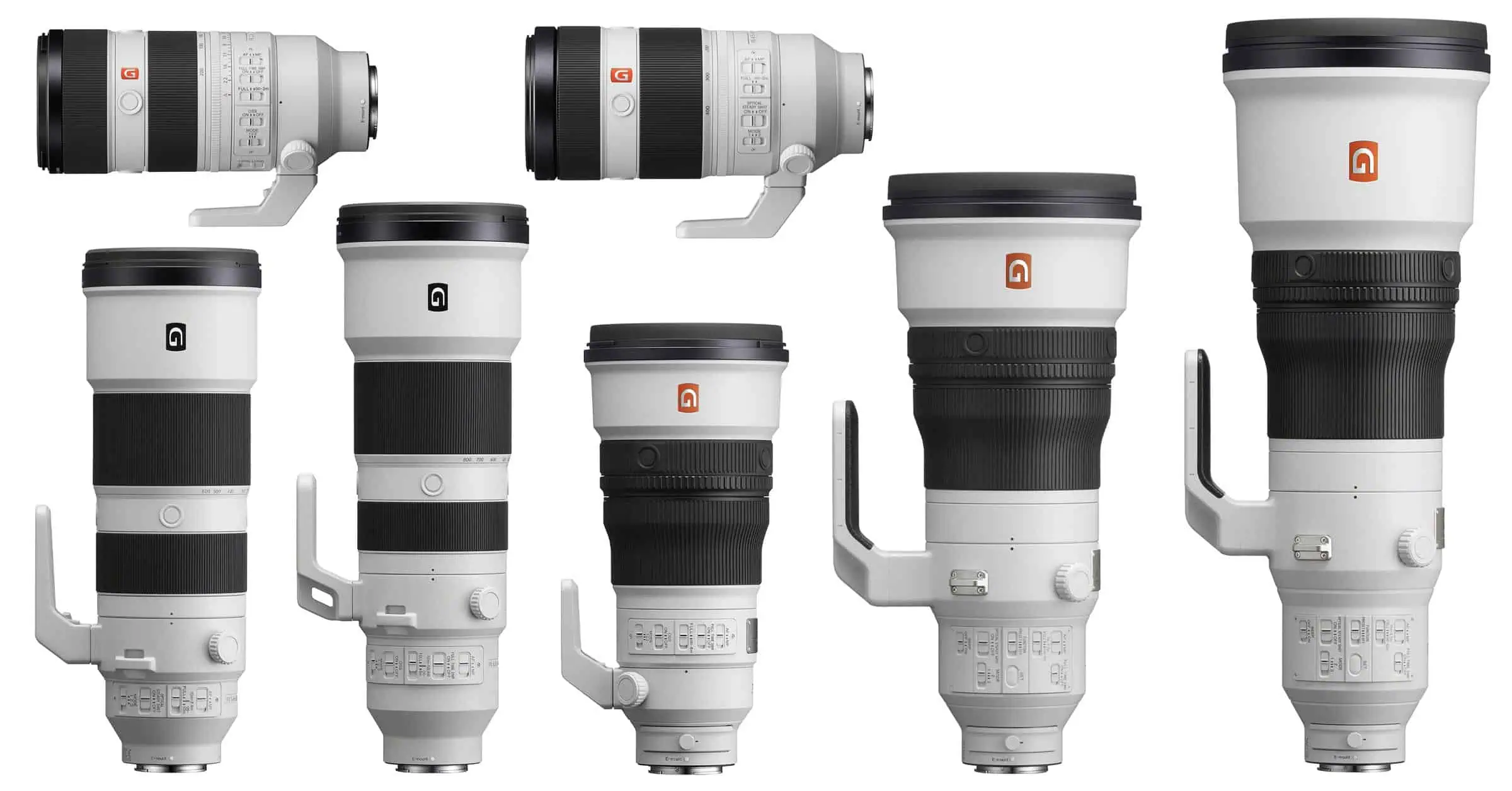
In a recent series of tests on systems for wildlife photography—primarily for birds in flight—I have only looked at zooms. However, these are regarded as the cheap and cheerful end of wildlife photography, with the “exotic” primes regarded as the creme de la creme.
In this post, I want to compare the Sony Zooms vs the 600mm f4 GMaster prime to see if the prime is worth the extra money.
If you would rather head straight to a concise summary, the TL;DR is at the foot of the page — or jump directly to the FAQ.
What’s the attraction of the big Primes?
On my recent Costa Rica trip I was amused by the number of photographers carrying massive and expensive Sony or Canon 600mm f4 prime lenses, usually with the Sony A1II or the Canon R5II. There was often the same flicker of condescension about the lowly zooms as you get from the driver of a Ferrari next to a Miata in traffic.
The benefit (other than bragging rights) of these fast primes is a 1.3-stop advantage to the 200-600 and a 2-stop advantage to the 400-800, plus a higher-quality image. Quality is made up of many factors, but at the top end, the key ones are contrast, resolution, flare control, and aberration control. Resolution is what you are paying the money for, however.
It’s a bit of a surprise, therefore, that independent numerical comparative resolution data for exotic primes does not exist — or at least I am unable to find any after an extensive web search.
Why is this? Two reasons. Firstly, because of the much greater physical distance required, most test rooms are unable to get the lens far enough away from the test chart. But there is a more profound reason than that. Lens companies provide early samples primarily to Youtube influencers, who often do not do any kind of detailed resolution testing (other than looking at images of a brick wall or similar).
Canon or Sony rarely provide these lenses to competent test houses such as Lenstip who might be able to do a decent job. Lenstip has to buy or borrow lenses itself, and these tend to be at the cheaper end of the spectrum, like the 200-600 and 400-800 Sony zooms.
As a result, almost everybody who buys an expensive prime does so on the basis that “it cost more, so it must be better,” and influencer reviews, not on quantified numerical data. Subjective positive reinforcement then follows, and prime owners become convinced their lens is the sharpest and best it could be and vastly superior to the cheaper zooms.
However, there is an excellent, if obscure, source of comparative data. It’s not numerical, but it is very instructive.
Telephoto lens testing at the Digital Picture
For decades, one of the key benchmarks for lens evaluation has been The-Digital-Picture, where Bryan Carnathan utilises a highly controlled, indoor lab environment. To eliminate atmospheric interference and lighting variables, Carnathan shoots in a dedicated basement lab where, for long telephotos, he uses a massive, professionally printed 8X ISO 12233 chart, shot at up to 100ft away.
This setup is designed to push optics to their absolute theoretical limits, often using 61MP sensors to find every ounce of “optical potential.” It is worth noting, however, that while this database is arguably the most comprehensive in the world, its standardised testing is almost exclusively focused on the Sony and Canon ecosystems. For wildlife photographers using other platforms, these lab results serve as a vital baseline for what modern glass can achieve, even if specific telephoto comparisons for other brands remain rare. And it’s very handy if all you want to do is compare Sony optics.
Test images are posted on the Digital Picture website, and here, finally, you can compare the resolution of an exotic Sony prime with a wildlife Sony zoom lens.
A Sony resolution shootout
Here is the Sony 600mm F4 prime (£12,000) — test data link
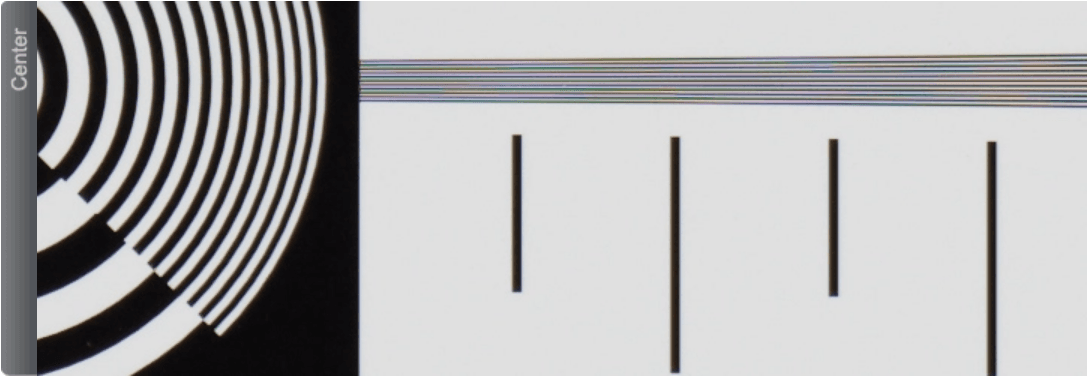
Here is the Sony 200-600 at 600mm (£1,600) — test data link, comparison link
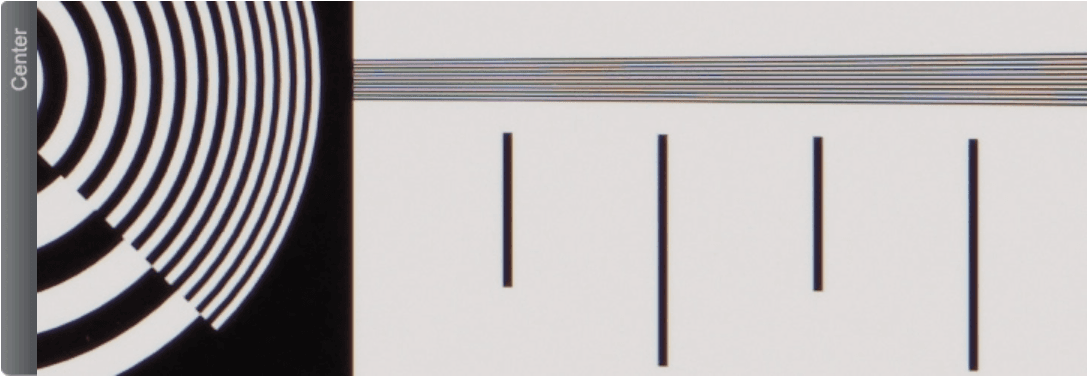
Here is the Sony 400-800 at 600mm (£2,400) — test data link, comparison link
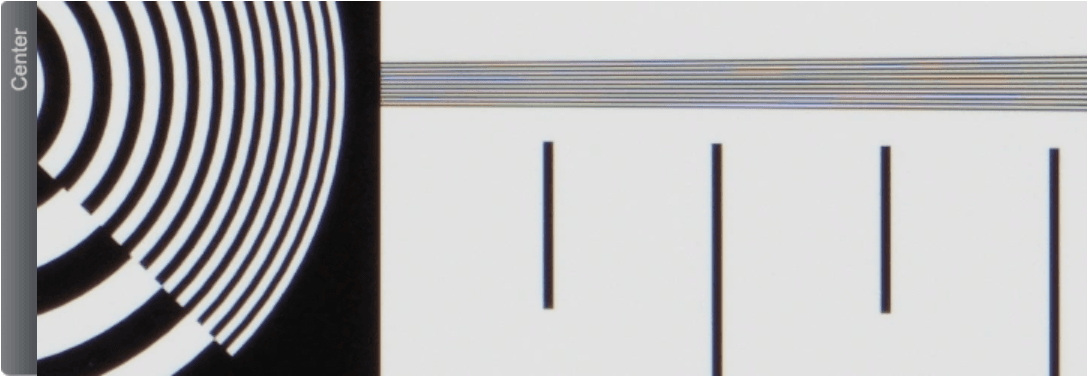
The most instructive way to look at these data is to use the comparison link. By moving the cursor from left to right you can see the big prime and the zoom lens in rapid succession.
Have a look. You might be surprised. Although the Prime contrast is very slightly better and the images are crisper, there is minimal difference between the lenses. IMHO, there is certainly not a £10,000 difference between the lenses. How can Sony and Canon get away with this? Subjective positive reinforcement to the rescue!! The same principle exists for the same reason in high-end audio equipment, despite excellent data to the contrary.
System Resolution vs. Optical Potential
In the The-Digital-Picture comparative test images almost all flagship lenses appear to clear 4000+ LPI (Lines Per Inch) with ease, as in the images above. By contrast, my tests often show these same lenses reaching their limit at much lower line resolutions.
There is a physical reason for this discrepancy. Industry lab tests typically utilize 61MP sensors (like the Sony A7R IV) and massive 8X charts. These environments are specifically designed to measure Optical Potential—the theoretical ceiling of the glass in a vacuum. Because the 8X chart is four times the size of a standard target, it provides exceptionally high ‘input contrast,’ revealing performance headroom that may never be realised on a standard sensor at wildlife distances. These results are great for measuring how “crisp” an image looks (sharpness), but it doesn’t tell you the absolute limit of detail. In fact, all the lenses look pretty similar.
My tests measure System Resolution. On a 33MPx sensor (Sony A7V), the physical grid of pixels acts as a natural ceiling (the Nyquist limit). While a lab shows what a lens could do on a very high MPx body, my results show the Realised Resolution you will actually see in your files at 18 meters. My Visual Extinction or MTF0 number tells you exactly when the lens “gives up,” and I would argue that’s what is important for wildlife lens comparisons.
Other benefits of exotic primes
Other than a 1.3 stop light advantage at the long end, the big primes also have a 1.3 to 2.0 stop bokeh advantage for creamy backgrounds. The same effect can be achieved by carefully choosing a background that is far away. Personally, for large birds in flight, I want a large depth of field for a bird that is in focus from wingtip to wingtip. I cover the subject in numerical detail in this post. Additionally, modern sensors, along with AI denoise tools, have minimised the benefit of the 1.3 stops for noise and dynamic range.
The disadvantages of the exotic primes — why Zooms?
The main disadvantage of the huge primes is their massive size and weight. They all have to be on tripods, which doubles the weight and size of the equipment carried. It is literally equivalent, in terms of mobility, to being in a wheelchair. In Costa Rica, I easily got 5x the photo opportunities with my setup compared to the big beast users, who usually stood all in a line for extended periods (often unsuccessfully) before picking up their equipment and trudging off to their next static position. Birds move around — a lot. You need to be fast and light to move with them.
Exotic primes are not optimal for birds in flight either, because of the movement constraints of the tripod plus the rotational inertia of their huge weight and length. And prime users cannot employ tricks like zooming out to get focus and zooming back in to capture the shot.
What prime users get, imho, are a smaller number of (possibly) sharper images and vastly fewer birds in flight. Good luck to them, but now that zooms and camera systems are so improved and 1 stop of noise is no longer a major issue, I will never go back to a fixed prime for birds in flight.
Pro vs non-pro zooms
The big three manufacturers now make short and medium zoom lenses that are fully equivalent to primes in lens quality. This is particularly true in the 24-70 and 70-200 ranges for Sony, Canon, and Nikon. Their f2.8 and f2.0 medium zooms are fully pro lenses. Why don’t they do the same for the wildlife zooms? None of Sony’s wildlife zooms are at the G Master quality level, for example, and the Nikon 180-600 zoom is not an S-line lens.
The reason is simple. It’s because the exotic prime market exists. The only next step from a Sony wildlife zoom is an exotic prime, and Sony makes huge margins from that jump. There is no way they could charge £12,000 for a 70-200, so they don’t. But they can and do for rich retired dentists who want the best for their wildlife hobby, and so far, everyone is happy.
OM system does not have a market in exotic primes. So they have done what is actually best for the wildlife photographer. They have created two professional-quality wildlife zooms that have outstanding optics—easily at or above the quality level of the Canikon 70-200 f2.8 pro zooms. In fact, the 50-200 f2.8 is effectively a medium pro zoom (very close to a 70-200 f2.8) that takes full advantage of the 4/3rds multiplier.
OM is the only company that makes high-end, optically excellent pro wildlife zooms. And given where the money is, it is likely to stay that way for a very long time.
TL;DR
The Sony 600mm f4 GMaster prime (£12,000) shows minimal visible image quality advantage over either the 200-600mm (£1,600) or the 400-800mm (£2,400) wildlife zooms at 600mm. Using standardised test data from The-Digital-Picture — one of the few sources with comparative lab images of both primes and zooms — the lenses are at effective perceptual parity in resolution and contrast at standard wildlife distances.
- The prime has very slightly better contrast and marginally crisper images, but the difference is minimal — certainly not a £10,000 difference.
- Independent numerical resolution data for exotic primes compared to zooms is not easy to find. Buyers appear to rely on influencer reviews and subjective positive reinforcement, not quantified comparative data.
- Neither of Sony’s wildlife zooms are G Master grade, despite their shorter zooms like 24-70 being of superb professional quality. This is likely because the exotic prime market depends on a quality gap between zooms and primes — a gap that may be largely illusory.
- OM System is the only manufacturer that makes professional-grade wildlife zooms with optics at or above the level of the best 70-200mm f2.8 pro zooms from any brand.
- The exotic primes also carry massive weight and mobility penalties that cost wildlife photographers far more in missed opportunities than the marginal optical advantage could ever recover.
Frequently asked questions
Is the Sony 600mm f4 GMaster sharper than the Sony 200-600mm or 400-800mm zooms?
Barely. Using standardised test data from The-Digital-Picture — one of the few sources with controlled lab comparisons of both primes and zooms — the 600mm f4 GMaster shows very slightly better contrast and marginally crisper images than the 200-600 and 400-800 at 600mm. However, the difference is minimal. The lenses are at perceptual parity at standard wildlife distances, meaning the £10,000+ price premium doesn’t buy a significant visible improvement in image sharpness.
Why is there no independent resolution data comparing exotic prime lenses to zooms?
Two reasons. Firstly, most test labs cannot accommodate the long distances needed to properly test 600mm lenses — they simply don’t have large enough rooms. Secondly, lens manufacturers provide early review samples primarily to YouTube influencers rather than to competent test houses like Lenstip. Influencer reviews rarely include quantified resolution testing. As a result, most exotic prime buyers rely on the assumption that higher price equals better quality, reinforced by subjective positive reinforcement after purchase.
Is a 600mm f4 prime better than a zoom for birds in flight?
Not necessarily. The prime’s massive size and weight require a tripod, which severely limits mobility and the ability to track fast-moving birds. In the field, zoom users can follow erratically moving birds, zoom out to acquire focus and zoom back in, and move quickly between positions. Prime users are essentially static. The marginal optical advantage of the prime is typically outweighed by the vastly greater number of shooting opportunities a lighter zoom system provides.
Why don’t Sony, Canon, or Nikon make professional-grade wildlife zooms?
Because it would undermine their exotic prime market. Sony’s 24-70mm and 70-200mm f2.8 zooms are G Master grade — fully equivalent to primes — but none of their wildlife zooms reach that level. This creates a deliberate quality gap that pushes serious wildlife photographers towards the hugely profitable exotic primes. OM System, which has no exotic prime market to protect, is the only manufacturer that makes professional-grade wildlife zooms with optics at or above the level of the best 70-200mm f2.8 pro zooms.
What is the difference between Optical Potential and System Resolution?
Optical Potential is what a lens can theoretically resolve under ideal lab conditions — typically measured with massive 8X test charts and 61MP sensors designed to remove the sensor as a bottleneck. System Resolution is what the lens actually delivers on a real camera sensor at realistic wildlife distances. In lab tests, all flagship lenses look similar because the conditions are optimised to show optical headroom. In real-world System Resolution tests, the sensor’s pixel grid becomes the limiting factor, and differences between lenses become more apparent — or, in some cases, less significant than expected.
Related Posts — OM vs Sony Series
Resolution
OM vs Sony Wildlife Zooms: Resolution Shootout
Focus Accuracy
Focus Accuracy Shootout: OM-1 II vs Sony A7V
Dynamic Range & Noise
Dynamic Range and Low-Light Noise: OM vs Sony
Lens Handling
OM and Sony Wildlife Zooms: Lens Handling
Zooms vs Prime
Sony Wildlife Zooms vs the 600mm f4 GMaster Prime
2026 Summary
OM and Sony Wildlife Zooms: 2026 Summary
Teleconverters & Focus
OM Pro Zooms: Effect of Teleconverters, ISO and Background on Focus Accuracy