OM vs Sony zooms: focus accuracy shootout
Following my detailed analysis of the focus accuracy of the 50-200mm f2.8 (Little White) and the 150-400mm f4.5 TC (Big White), I was interested in how these lenses stacked up against the best zooms that Sony had to offer. A few weeks after my initial tests, I returned to Gigrin Farm for a focus accuracy shootout between the best of the OM vs Sony Zooms.
If you would rather head straight to a concise summary, the TL;DR is at the foot of the page — or jump directly to the FAQ.
OM vs Sony Zooms
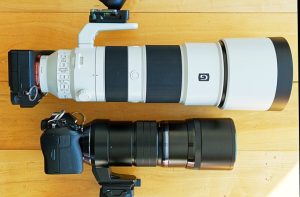
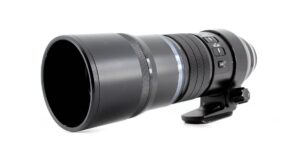
OM System: I tested the M.Zuiko 50-200mm f2.8 IS PRO + MC20 (yielding an 800mm FFE f5.6) and the M.Zuiko 150-400mm f4.5 (300-800mm FFE) TC1.25X IS PRO with the OM1 MkII.
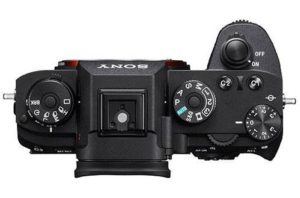
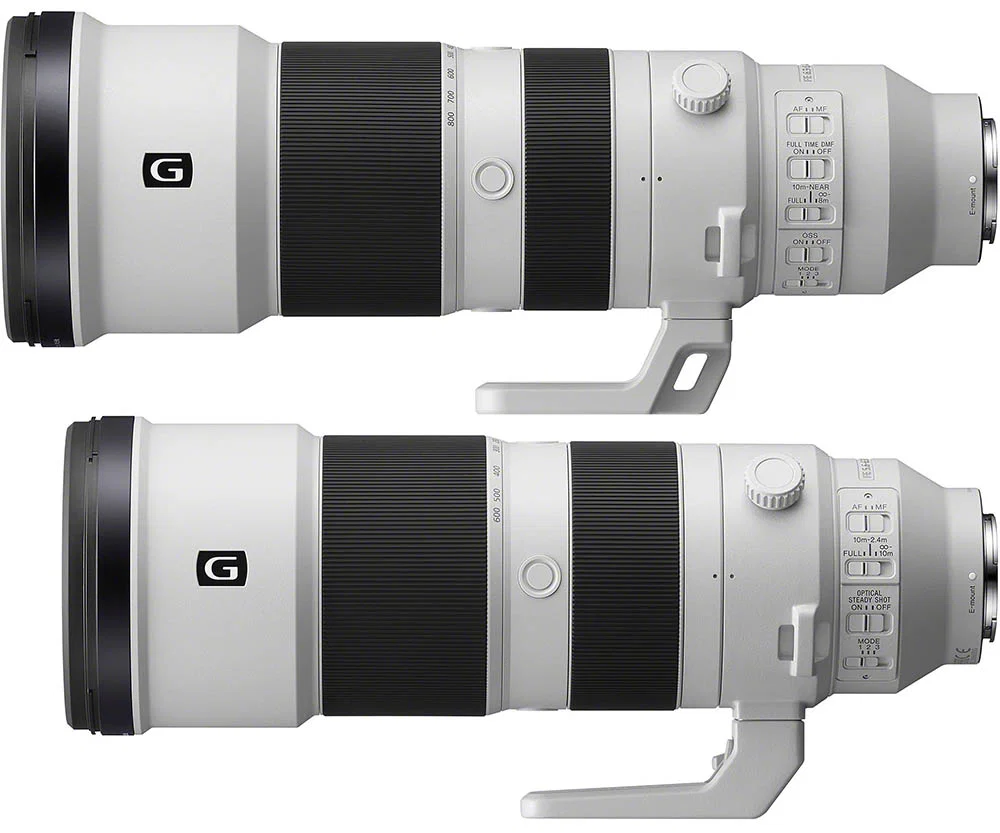
Sony System: I tested the FE 200-600mm f5.6-6.3 G OSS and the newly released FE 400-800mm f6.3-8 G OSS. with the new A7V.
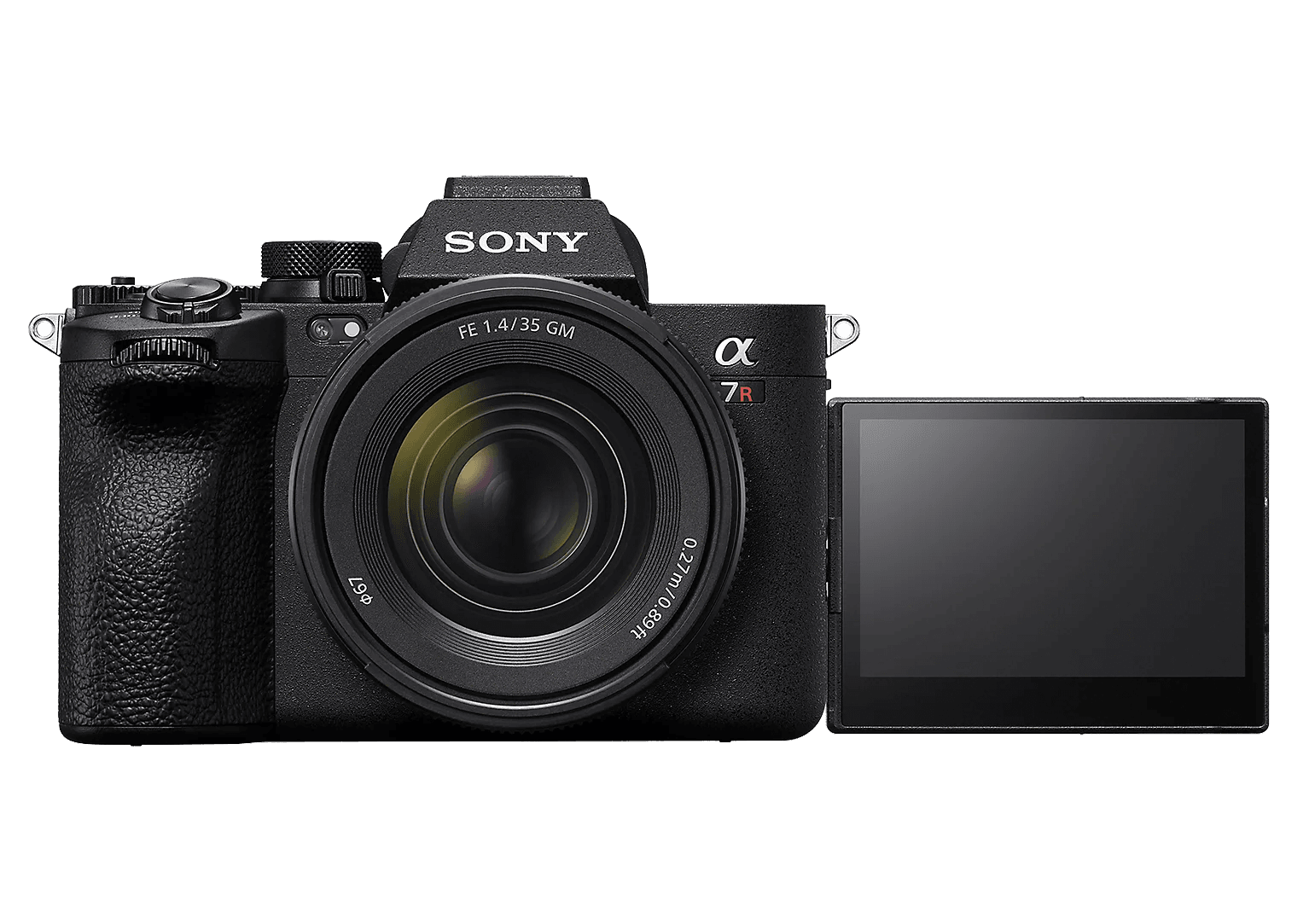
The A7V is an extremely interesting new camera and one that I really like. I rented the camera and both Sony lenses for these tests (and also to test the outright lens resolution – see later post).
The A7V has the same AI bird recognition algorithms as the A9 III and the A1 II, but the function is integrated into the main processing unit and uses a faster 3nm technology node (the other two systems use 10nm, a much older, slower and less efficient technology). This produces a faster and more power-efficient processor. The only practical difference between an A7V and an A1 II is that it is a semi-stacked sensor, with some implications for rolling shutter, and the pixel density. Most reviews indicate the AF is the same between this and the A1/A9 systems.
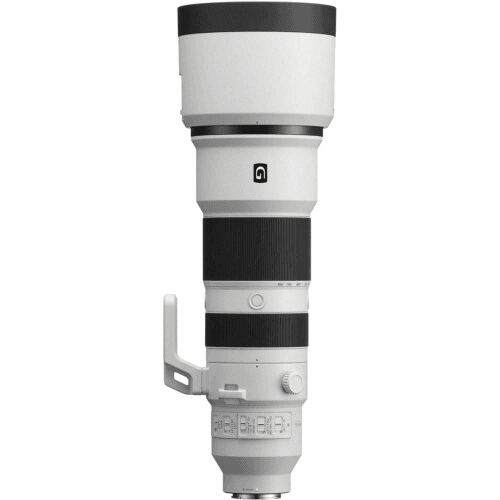
The Sony 200-600 F5.6-6.3 is a classic wildlife zoom, and by far the most widely used lens I saw on my recent Costa Rica trip. I have owned two of them, and although I was disappointed (to put it mildly) at the performance, this was mostly due to the A7R4 camera I was then using. More interesting is the new 400-800 f6.3-f8 lens. This has been very favourably reviewed and is in the ideal focal range for me. I was very interested to see how it performed and handled, and was quite prepared, if the tests worked out OK, to replace my Nikon Z system with the Sony and one or both of these zooms.
The test setup for OM vs Sony Zooms
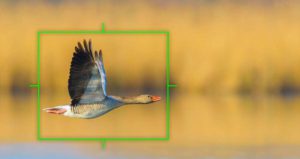
The OM cameras and lenses were set up exactly as in the prior tests. The OM1 Mk II had bird AF subject detect active, and the shutter at SH2 at 50fps and mostly 1/2000. The camera was in full manual, with the LW/MC20 wide open at f5.6, and the BW also wide open at f4.5. I varied the ISO to ensure the bird was exposed correctly, usually at the beginning of each burst.
The goal, which is usually (but not always) achieved, is to get the bird correctly exposed as opposed to an average exposure for the whole scene. Because I was continuously varying the ISO for the lighting on the bird, it was a reasonable proxy for available light.
The Sony was set up similarly, at 1/2000, and 30fps, with bird AF active and the central AF zone selected. The base settings were downloaded from the excellent Jan Wegener’s setup guide. Sony also has the ability to show over- or underexposure on the bird, so I used full manual, with the aperture and shutter speed fixed, and varied the ISO to maintain good exposure on the subject.
Focus accuracy shootout: OM vs Sony for birds in flight
Having four zoom lenses and two cameras to shoot with made for a complex and busy afternoon. The weather was much better than the previous Gigrin shoot, which helped a lot.
After my experience with backgrounds, I was more careful to shoot the Kites in clear sky whenever possible. The main problem was with the weight of the lenses. In order of weight, the lenses were:
- OM 50-200/MC20: 1.2kg without tripod collar, 1.4kg with tripod collar
- OM 150-400: 1.9kg
- Sony 200-600: 2.1kg
- Sony 400-800: 2.5kg
An extra 400g at the heavy end (the difference between 2.1 and 2.5kg) is a great deal more important than at the light end of this scale. Basically, the 400-800 was impossible to hand-hold for extended periods. My arms were literally shaking after 2 minutes. On the other hand, I have hand-held the 50-200 for up to two hours in 4-5 minute periods without fatigue. I brought a tripod with a gimbal head, but the Kites move very fast and erratically at Gigrin, and a gimbal head is not at all effective for this situation I mostly hand held the 400-800 and got excellent accuracy, but nothing like as many shots.
I shot nearly 11,000 images overall. After eliminating out-of-frame shots, there were about 800 on the 400-800, and 2,500 each for the others. I evaluated focus using the excellent FastRawViewer (FRV) software. This enables the Raw image to be evaluated rather than the embedded or sidecar JPG. This is particularly key to enabling RAW exposure adjustments, shadow boost, and zooming at full resolution, all of which help make a better assessment.
I used the same approach for all images, without knowing (for each brand ) what the lens was or the shooting conditions, and went through the images 3 times (not a great deal of fun). Here are the results in summary.
The results
| Brand | Lens | Total in frame | Out of focus | % In focus |
|---|---|---|---|---|
| OM | 150-400 f4.5 TC | 2,761 | 222 | 92% |
| OM | 50-200 f2.8 + MC20 | 2,725 | 199 | 93% |
| Sony | 200-600 f5.6-6.3 | 2,377 | 242 | 90% |
| Sony | 400-800 f6.3-8 | 808 | 15 | 98% |
| Grand total | 8,671 | 678 | ||
Total images shot: 10,722 (including 2,051 out-of-frame shots excluded from accuracy calculation).
Comments
Firstly, this shows that the cream of the OM and Sony range can all meet 90% and more focus accuracy. The power of bird AF now means that effort can be put into composition without worrying about getting basic focus lock, as used to be the case.
Beyond that, the 50-200 with MC20 slightly outperformed the BW and the 200-600. This confirms my earlier tests and shows that you give nothing away in focus accuracy when using the OM pro zooms.
The 400-800 showed excellent focus accuracy. However, that number conceals the true situation. It is impossible to practically hand-hold the lens for extended periods. You therefore get a far more limited selection of shots. For me, the 400-800 may be a perfect lens for static/perched birds, but it is completely unusable for birds in flight. But it is very quick to focus, very sharp, and produces lovely images.
The 200-600 showed its age in these tests. The 400-800 has better lens elements, better and faster focus motors and better image quality. If Sony updated the 200-600 with the latest tech, it would be an awesome lens.
I also really liked the A7V. It was easy to use, handled well, and produced lovely and sharp images. With a revised 200-600, it would be a super wildlife setup.
However, at the moment none of the Sony combinations can compete with the OM1 Mk II and the 50-200/MC20 combination. Without the lens foot it can be hand held all day and the ability to swing the lens and follow a fast moving bird is unmatched. It’s worth pointing out that while the Sony maximum frame rate is 30fps, which usually declines to 25 in an extended burst, the OM shoots at a consistent 50fps, or double that rate. So for any given burst not only do you get better accuracy, but you also get double the shots.
But……
Yes, but everybody knows that full frame setups are superior to M 4/3 ones don’t they? These tests might show slightly better focus accuracy, but look at all the things you lose out on?
Spoiler alert:- having looked at focus accuracy, the next few posts will deal with the other largely incorrect beliefs about M4/3 vs Full Frame zooms for wildlife. But to whet your appertite, here is the actual situation:
OM System has worse Dynamic range – Nope
OM System has worse low-light performance/more noise: – Nope
OM System is not as sharp because it only has a 20MP sensor – Nope.
In future posts, I will show using my own tests and published data, that for birds in flight and wildlife generally, my OM system gives nothing away to the latest, spiffiest Full Frame systems on any of the four key attributes above. And that’s why. so far, I am not going to change.
TL;DR
All four wildlife zoom systems achieved over 90% focus accuracy on birds in flight, tested on Red Kites at Gigrin Farm using bird-detect AF. Across nearly 11,000 images:
- The OM 50-200mm f2.8 + MC20 on the OM1 Mk II achieved the highest practical accuracy at 93% across 2,725 in-frame shots — confirming that the 2x teleconverter does not degrade autofocus performance.
- The OM 150-400mm f4.5 TC scored 92% across 2,761 shots — essentially identical to the smaller lens.
- The Sony 200-600mm on the A7V scored 90% across 2,377 shots — competent but showing its age against the newer systems.
- The Sony 400-800mm f6.3-8 scored a remarkable 98% — but from only 808 shots, because at 2.5kg it was impossible to hand-hold for extended periods, making it impractical for sustained bird-in-flight work.
- The OM 50-200/MC20 combination, weighing just 1.2kg without the tripod collar, delivered the best balance of accuracy, shot volume, and handling for birds in flight. None of the Sony combinations could match it for sustained handheld shooting.
Frequently asked questions
Why did the Sony 400-800 produce fewer shots than the other lenses if it has the best focus accuracy?
Because at 2.5kg it was essentially impossible to hand-hold for extended periods — my arms were shaking after two minutes. A gimbal tripod head is ineffective for the erratic, fast movement of Kites at Gigrin. The 98% accuracy figure therefore comes from a much smaller sample of 808 shots, mostly taken in short bursts before fatigue forced a rest. The OM 50-200/MC20, at 1.2kg, was hand-held continuously for hours and generated over 2,700 analysable shots in the same session.
Does the MC20 2x teleconverter reduce autofocus performance on the OM system?
These tests show no meaningful penalty. The 50-200 with MC20 at 93% actually edged out the bare 150-400 at 92%, and both exceeded the Sony 200-600 at 90%. The conventional wisdom that teleconverters degrade AF performance does not apply to the OM pro zooms in combination with the OM1 Mk II’s bird-detect AF system.
Is the Sony A7V’s autofocus system equivalent to the A1 II or A9 III for bird photography?
In practice, yes. The A7V uses the same AI bird recognition algorithms but on a faster 3nm processing node, whereas the A1 II and A9 III use older 10nm technology. Most published reviews confirm the AF performance is effectively equivalent across these three cameras. The 90% result for the 200-600 on the A7V reflects the lens rather than the body — the 400-800 on the same A7V achieved 98%.
Why does the OM1 Mk II shoot at 50fps when the Sony A7V maxes out at 30fps?
The OM1 Mk II uses a stacked sensor with a dedicated high-speed readout that sustains 50fps indefinitely in SH2 electronic shutter mode. The A7V’s semi-stacked sensor architecture limits it to 30fps, which in extended bursts can drop further. For birds in flight, the OM’s higher frame rate means more shots per burst and more opportunities to capture the decisive moment — compounding the advantage of the lighter, easier-to-track lens.
How was focus accuracy assessed — did you use the camera’s own in-focus indicator?
No — the camera’s in-focus indicator is unreliable, particularly in continuous AF on fast-moving subjects. All assessment was done manually on RAW files using FastRawViewer, which allows full-resolution zoom with RAW-level processing, shadow boost, and exposure adjustment. Each image was reviewed three times independently before being classified. The methodology is described in detail in the FastRawViewer post.
Related Posts — OM vs Sony Series
Resolution
OM vs Sony Wildlife Zooms: Resolution Shootout
Focus Accuracy
Focus Accuracy Shootout: OM-1 II vs Sony A7V
Dynamic Range & Noise
Dynamic Range and Low-Light Noise: OM vs Sony
Lens Handling
OM and Sony Wildlife Zooms: Lens Handling
Zooms vs Prime
Sony Wildlife Zooms vs the 600mm f4 GMaster Prime
2026 Summary
OM and Sony Wildlife Zooms: 2026 Summary
Teleconverters & Focus
OM Pro Zooms: Effect of Teleconverters, ISO and Background on Focus Accuracy